The 22nd IEEE Mediterranean Electrotechnical Conference (MELECON 2024) was held in Porto, Portugal, from 25th to 27th June 2024, as a major international forum presenting design methodologies, techniques, and experimental results in emerging electro-technologies. It brought together researchers and practitioners from different fields of electrical engineering and computer science. The technical sessions were organized into four main tracks: Track 1 — Power, Energy, and Power Electronics; Track 2 — Smart Industry and Manufacturing; Track 3 — Future Healthcare; and Track 4 — Digital Transformation.
The face-to-face sessions were held in Alfandega Congress Center, an old building of historical importance positioned near the river coast but modernized for contemporary meetings. The location was easily accessible by public transportation from other parts of the city.
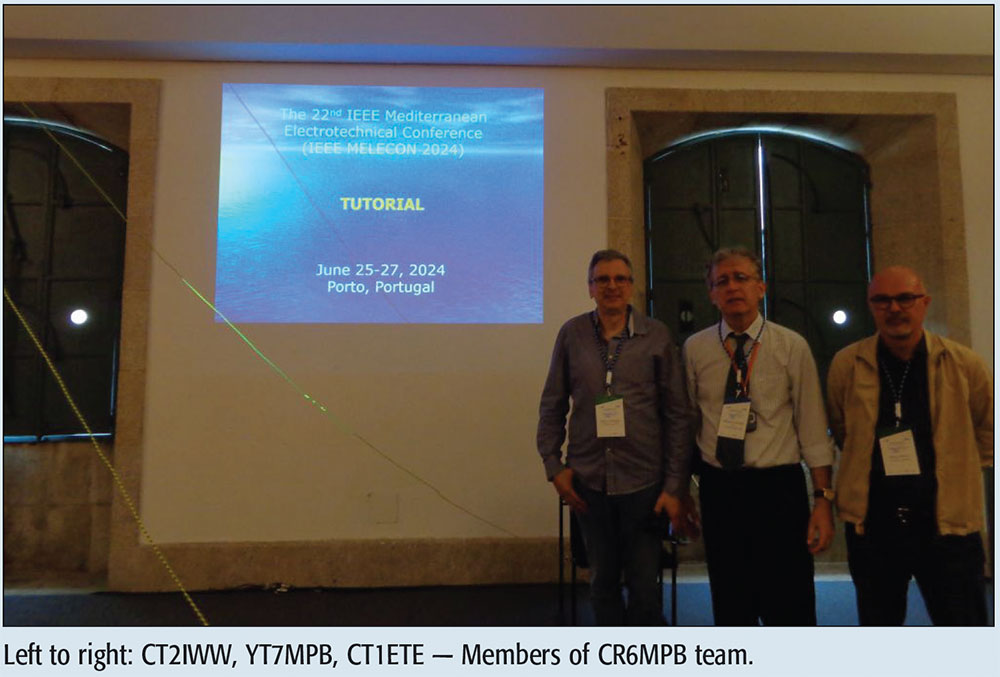
MELECON 2024 hosted four half-day tutorial sessions. One of them, entitled “Advantage of Winlink Global Radio Email® infrastructure and APRS™ positioning tool from the Mediterranean coastal perspective,” was performed by Miroslav Skoric (amateur radio identifier YT7MPB) from IEEE Austria Section, with the assistance of two local Portuguese radio amateurs, Paulo Pinto CT1ETE and Paulo Teixeira CT2IWW. The tutorial focused on emergency communications and email services, such as Winlink (also known as Winlink 2000) and related hardware & software solutions. Considering that the primary audience of MELECON conferences are technology people who primarily reside in countries surrounding Mediterranean Sea, we intended to increase awareness for alternative ways of handling emails in cases of emergency at sea or shore.
On the other side, APRS (Amateur Packet Reporting System), as a predecessor of the Internet-of-Things (IoT), appeared in the early nineties as an amateur radio system for multilateral informing on what was going on in a geographical area and has been continually upgraded with new features. Today, APRS includes weather-related information, movable objects information (car traffic), road works, nearby gasoline stations, announcements for incoming radio amateur gatherings, home locations of “hams,” repeater frequencies, and so on. The primary purpose of APRS is to help radio amateurs who traveled through unknown territories (E.g., foreign countries or remote states/provinces within their own country) to feel comfortable by looking at the display of their mobile (vehicle) transceivers (or even hand-held amateur radios) – without any need for cell telephony or Internet providers. The system uses a single VHF radio frequency across a continent, so no radio channel changes after crossing national borders.
The presenter arrived in the area a few days before the main event to prepare fresh data for discussion during the tutorial session. The accommodation included a terrace and a small garden, both capable of temporary antenna installation. Among them were Alpha Antenna MIL 2.0 and DXCommander Rapide -both of vertical design and intended to reach distant correspondents on the amateur radio HF (high frequency) bands across Europe. Besides that, two ground-plane antennas, Sirio GPA 135-175 and Sirio SD 2000/U, were also tested on the VHF and UHF parts of the radio spectrum, respectively. An innovative version of the antenna coaxial cable, Messi & Paoloni Ultraflex 7 “Sahara,” completed the experimental portfolio for this occasion. Initial results (better than expected) were presented & discussed during the tutorial lecture.
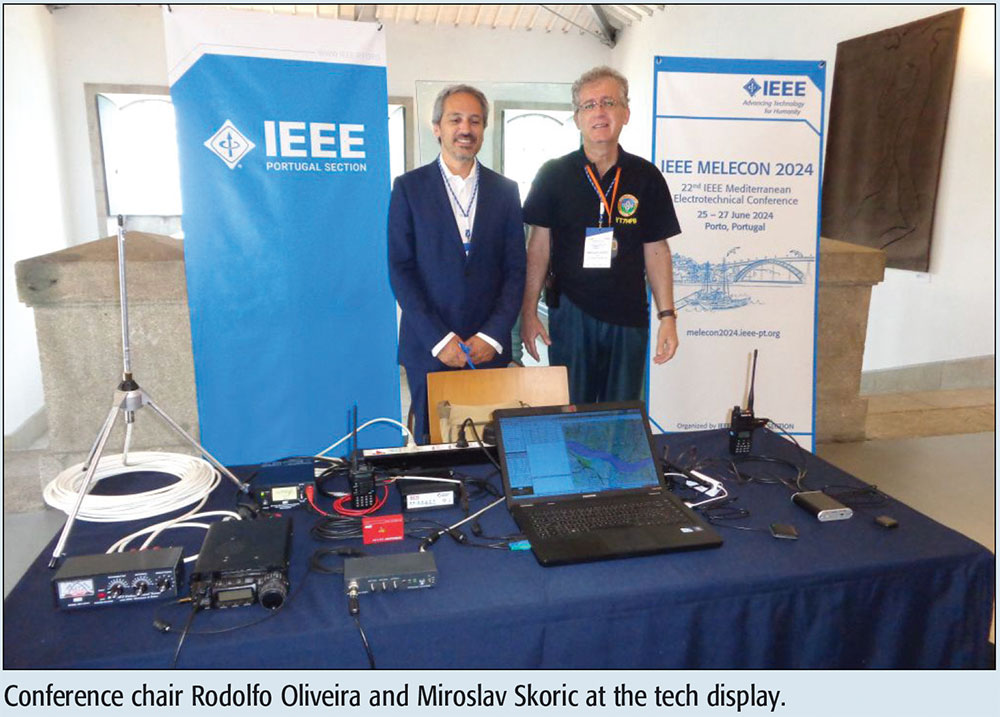
Thankfully to Portuguese telecommunication authority ANACOM, a special event radio identifier CR6MPB was granted on time to celebrate MELECON 2024 on international amateur radio waves. The tutorial speaker also arranged a small technical display near the registration desk, including VHF and HF radio stations, antenna tuner, GPS/GNSS receivers, packet-radio and pactor modems, and specialized computer software. The display took the whole second and third conference days so that paper authors and participants who were absent at the tutorial session had a rare opportunity to get closer to the amateur radio technology, as well as to get first-hand information about how to start using it on behalf of their local communities — particularly in cases of emergency.