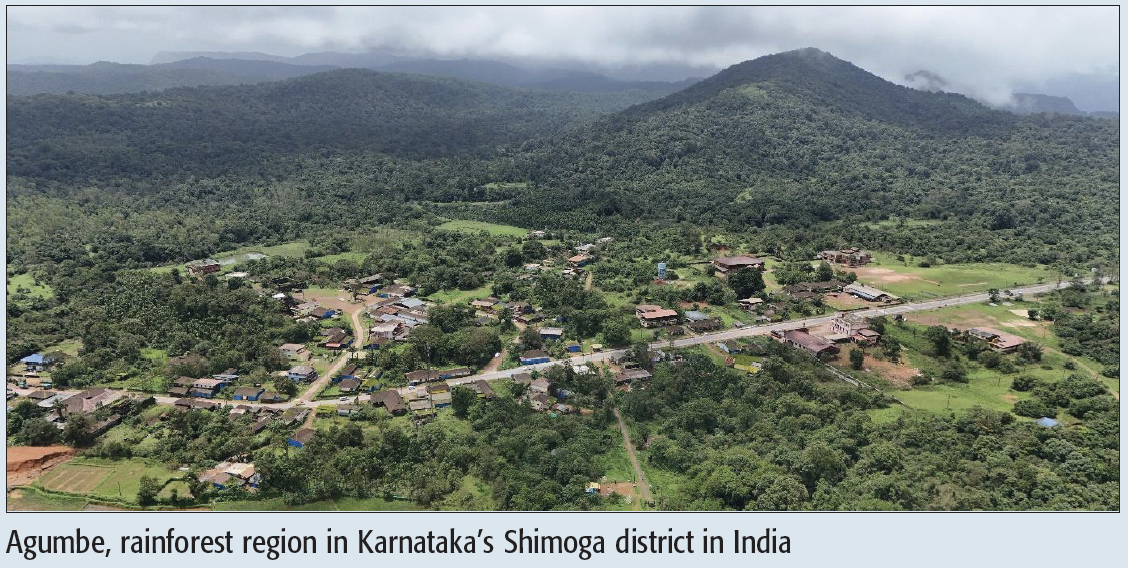
Promoting HEALTH, a project that brings reliable Internet connectivity to Agumbe, a rainforest region in Karnataka’s Shimoga district, often listed as one of India’s “no network zones.” The elevation of Agumbe is 660 meters above mean sea level; rainfall here exceeds 7,000 millimeters per year; the terrain is steep, forested, and often inaccessible; and power outages are frequent. Tucked in one of the corners of the Western Ghats Mountain range, Agumbe is a UNESCO World Heritage Site, but is also the most cut-off area, with complete network isolation. Agumbe ghat (a mountain pass) connects Shimoga district to Udupi district and has vital geographical significance in enabling the socio-economic development of both districts.
The residents of Agumbe face connectivity challenges due to its rugged terrain and the dangerous Agumbe ghat road that has 14 hairpin bends. Several road accidents happen every year, and the lack of connectivity has led to several people losing their lives. Frequent landslides during the monsoon season further add to the agony of Agumbe residents, disconnecting them from Udupi, where many seek medical care and commute for education/jobs.
Agumbe’s residents lack essential Internet-enabled services. Healthcare suffers without online consultations and emergency services. Limited offline resources hinder education. Job seekers are restricted from opportunities beyond the village. Despite having the option to work from home, the residents of Agumbe have to leave their hometown due to poor connectivity. Local businesses struggle without digital transactions, farmers lack vital agricultural information such as weather forecasts, and preserving heritage becomes challenging.
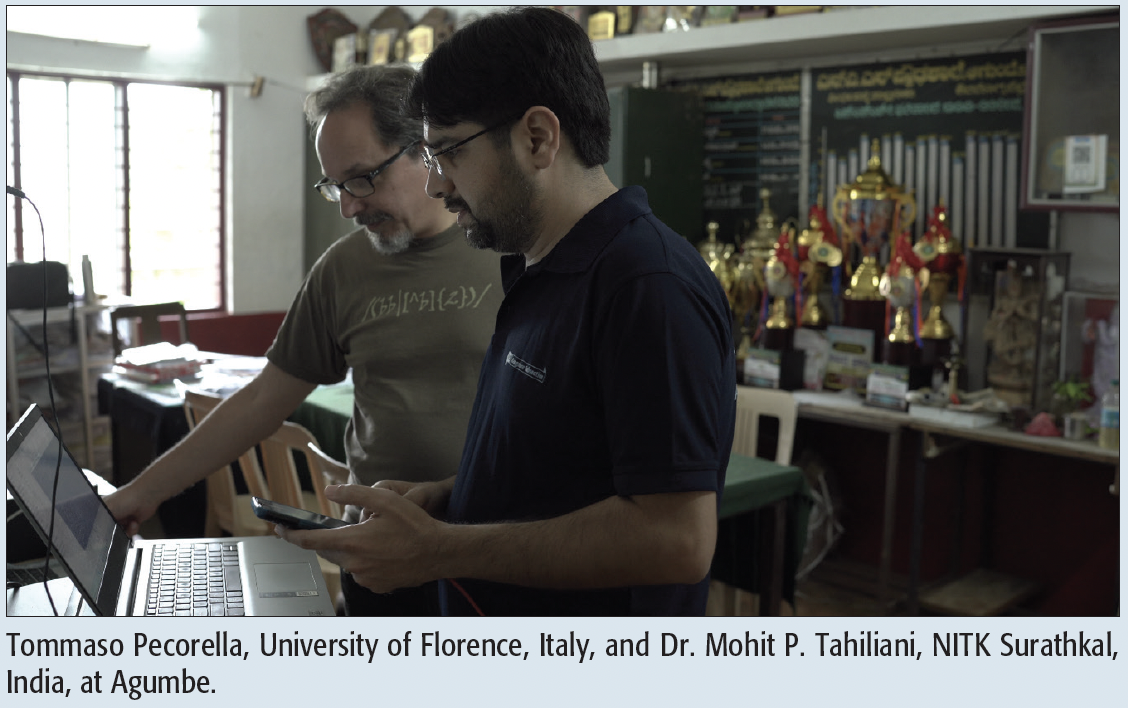
To address these challenges, the engineers from the National Institute of Technology Karnataka (NITK), Surathkal, India, led by Dr. Mohit P. Tahiliani, proposed an optical fiber-based solution and successfully deployed 130 Internet connections in and around Agumbe between December 9, 2024, and December 9, 2025. This project is funded by the IEEE Communication Society and IEEE Tech4Good (T4G), and facilitated by the IEEE Mangalore Subsection and the IEEE Bangalore Section. It strengthens the network infrastructure in Agumbe by carefully architecting an optical fiber-based solution that addresses the challenges posed by rough, hilly terrain, poor weather conditions, and power constraints, while ensuring long-term sustainability. This project bridges the digital divide and transforms Agumbe into a digitally connected village while maintaining its rich heritage, fostering socio-economic and sustainable development, and enhancing the quality of life for its residents.
Reliable Internet connectivity is no longer optional; it is essential infrastructure. This project demonstrates how targeted, sustainable connectivity can immediately improve healthcare access, education, livelihoods, tourism, conservation research, and overall quality of life in remote regions. Despite extreme weather conditions and challenging terrain, the model proved effective, scalable, and community-driven. With broader institutional adoption, similar interventions can rapidly bridge the digital divide across India’s most isolated regions. Agumbe’s success shows that when connectivity is treated as a public good, even the most remote and environmentally sensitive areas can participate fully in the digital economy.
Project documentary on YouTube: https://www.youtube.com/watch?v=QHdst6uE_5U.