I successfully completed an IEEE ComSoc Distinguished Lecture Tour (DLT) in Mexico and the United States this past March. During this tour, I visited three ComSoc chapters: the Monterrey Chapter in Monterrey, Mexico; the Morelos Chapter in Cuautla, Mexico; and the Atlanta Chapter in Atlanta, GA, USA. It was a wonderful opportunity to meet new colleagues, engage with researchers, educators, and students across four universities, and experience the warm hospitality of my hosts in Mexico and Atlanta.
This was a compact tour with a tight itinerary. I delivered five talks at four universities in three cities, scheduled as follows:
-
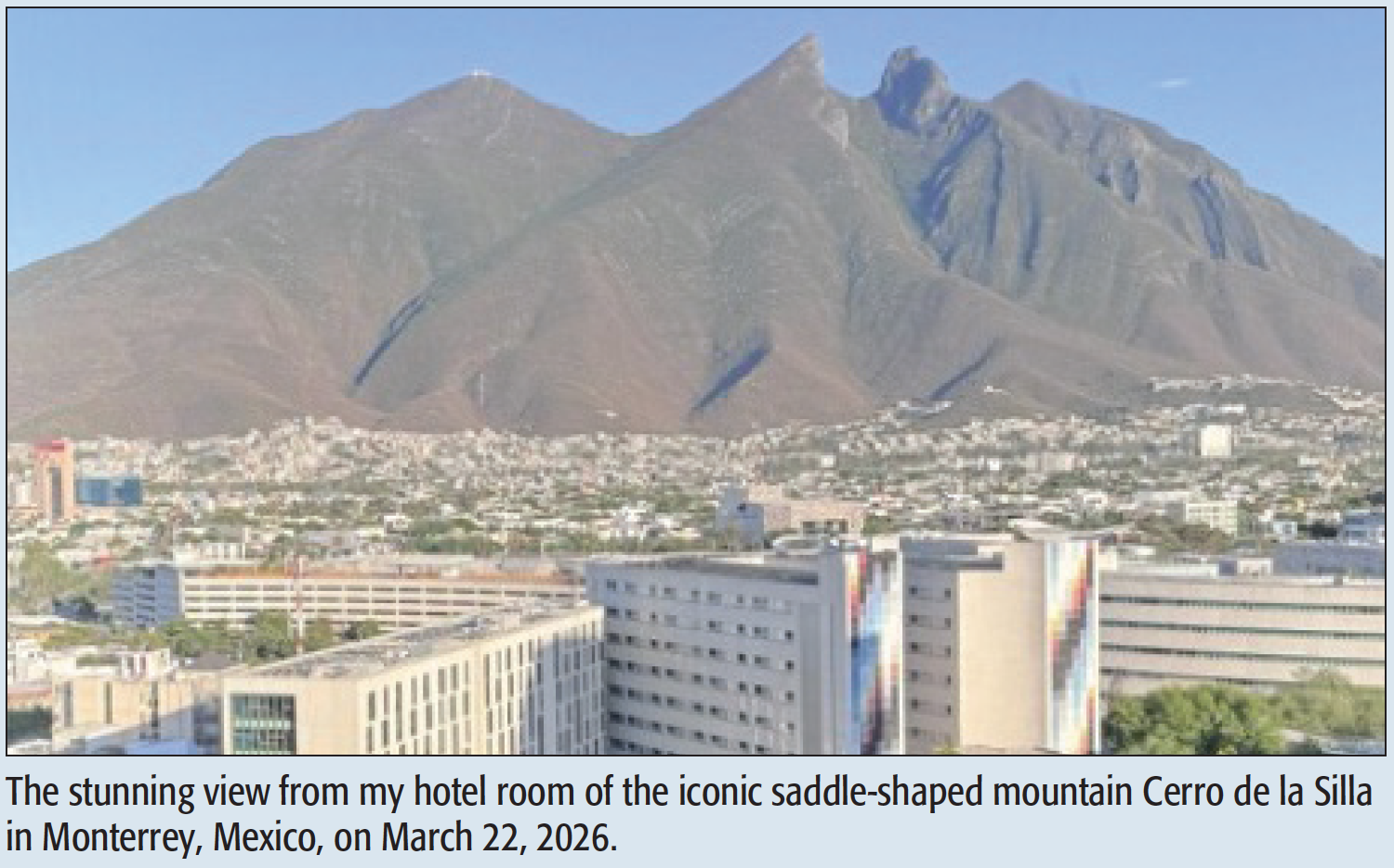
Talk 1: “Covert Symbol Embedding via Chirp Signals for Integrated Sensing and Communications,” Tecnologico de Monterrey, Monterrey, Mexico — hosted by Dr. Cesar Vargas-Rosales (Chair, IEEE ComSoc Monterrey Chapter), Mar.23, 2026
-
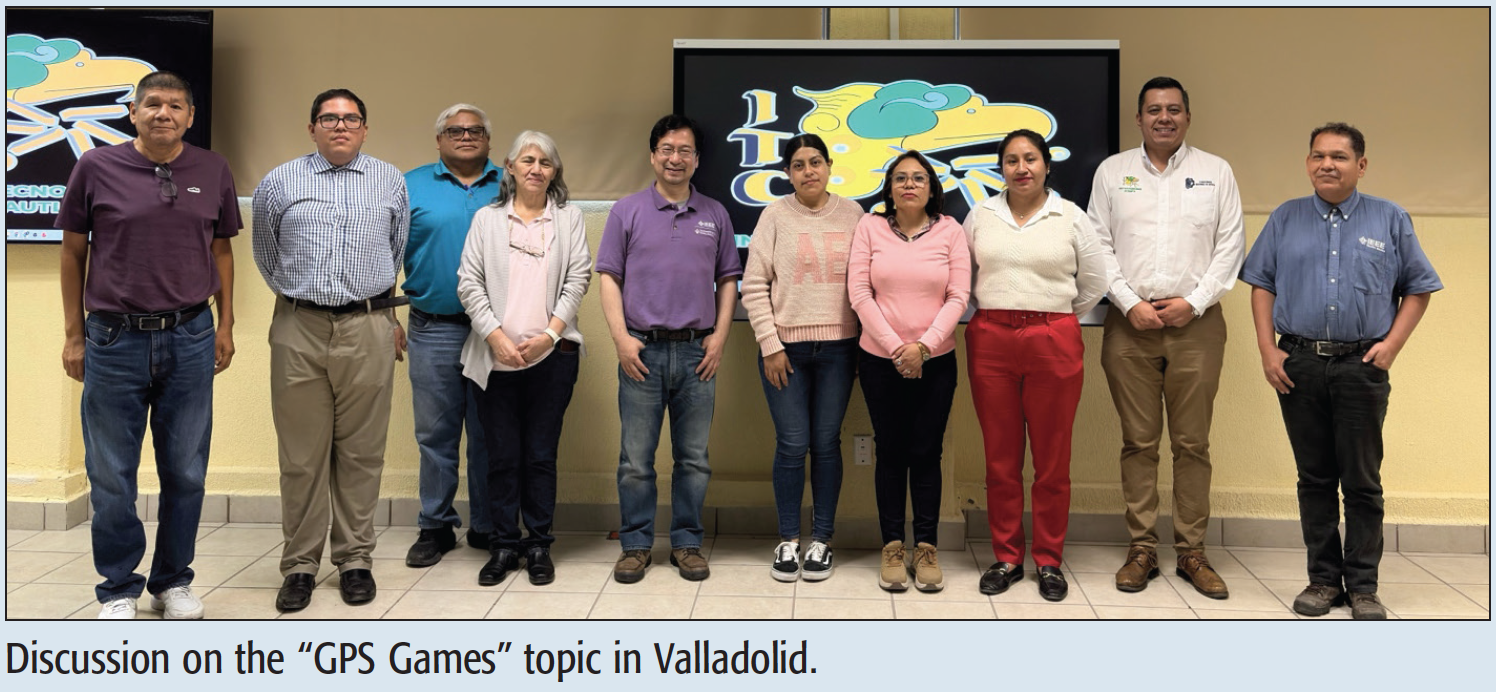
Talk 2: “Diffusion-enabled 3D Human Pose Tracking, Data Augmentation, Completion, and Acceleration,” Technological Institute of Cuautla, Cuautla, Mexico — hosted by Mr. Jesus Vazquez (Chair, IEEE ComSoc Morelos Chapter), Mar.25, 2026
-
Talk 3: “How to Write, Publish, and Survive: Practical Advice on Technical Writing and Research Growth,” Technological Institute of Cuautla, Cuautla, Mexico — hosted by Mr. Jesus Vazquez (Chair, IEEE ComSoc Morelos Chapter), Mar. 25, 2026
-
Talk 4: “Diffusion-enabled 3D Human Pose Tracking, Data Augmentation, Completion, and Acceleration,” The Georgia Tech Research Institute (GTRI), Georgia Tech, Atlanta, GA — hosted by Mr. Brian Page (Chair, IEEE ComSoc Atlanta Chapter), Mar.27, 2026
-
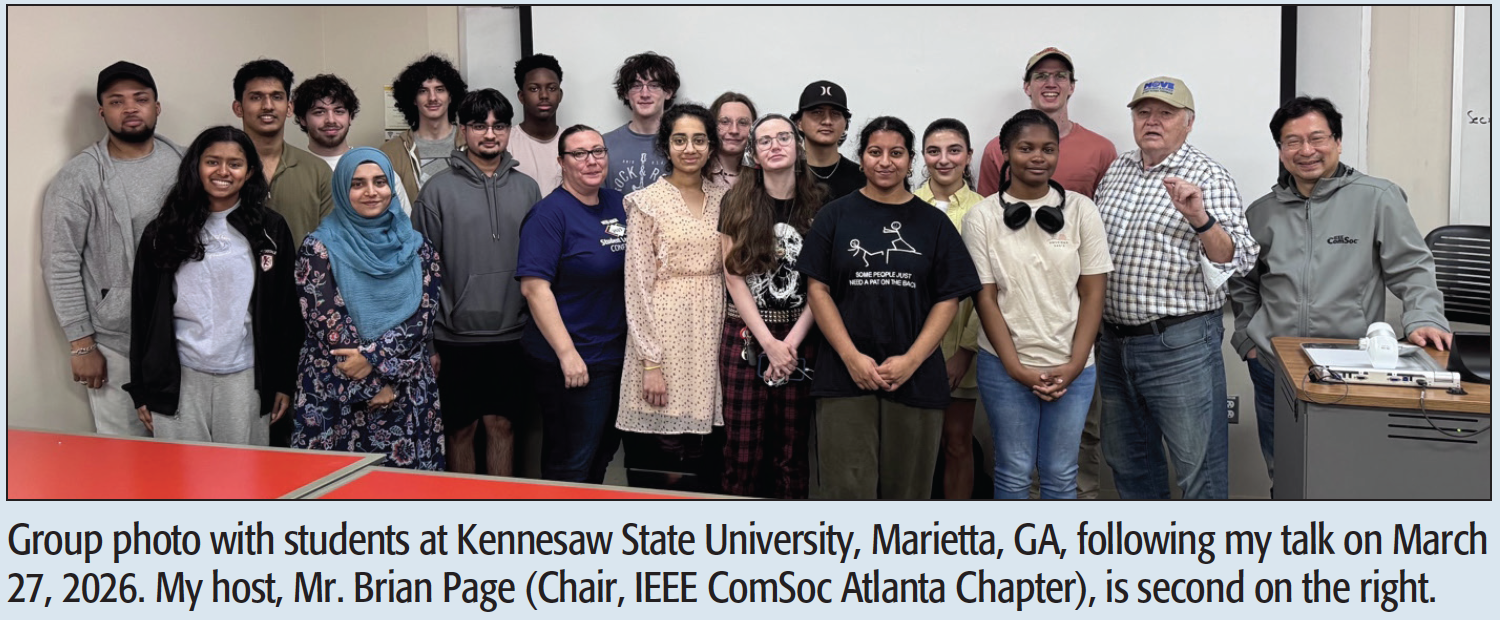
Talk 5: “Diffusion-enabled 3D Human Pose Tracking, Data Augmentation, Completion, and Acceleration,” Kennesaw State University, Marietta, GA — hosted by Mr. Brian Page (Chair, IEEE ComSoc Atlanta Chapter) and Dr. Razvan Cristian Voicu (Assistant Professor at Kennesaw State), Mar. 27, 2026
Talk 1 focused on our recent work in Integrated Sensing and Communication (ISAC), which unifies radar and communication on a shared platform to enhance spectral efficiency and reduce hardware costs. Specifically, we introduced a covert communication framework for Frequency-Modulated Continuous Wave (FMCW) radar systems that embeds binary symbols directly into the radar chirp. By selectively activating or suppressing transmissions at predefined time–frequency locations, information is conveyed without affecting core radar functionality. This work demonstrates covert embedding as a lightweight approach toward practical ISAC systems for automotive, defense, and IoT applications.
Talks 2, 4, and 5 focused on our research in machine learning–empowered wireless sensing. One theme explored how various radio-frequency (RF) signals can be leveraged to detect and interpret human activities. Another addressed the effective application of machine learning to RF data augmentation, emphasizing methods to reduce reliance on large datasets and minimize the effort required for RF data collection. Finally, we discussed reconstructing full 25-joint configurations from partial 12-joint inputs and accelerating diffusion model training using a novel training-free method.
Talk 3 shared practical lessons on technical writing and publishing, drawing from personal experience—from writing a first conference and journal paper to building a sustained research program. It covered what makes a strong paper; strategies for selecting research topics at various career stages; crafting compelling introductions; managing related work and references; and navigating venue expectations, providing actionable guidance to help graduate students and early-career researchers produce stronger papers and develop a coherent, impactful research trajectory.
The talks were well received, drawing both in-person and remote attendees, including students, faculty, and researchers from the three ComSoc chapters. Engaging and insightful discussions with participants during the sessions helped me better understand current challenges and refine my approach to presenting complex technical concepts to a broader, multidisciplinary audience.
This was my first visit to Mexico after studying and working in the U.S. for 26 years, making it a memorable journey of knowledge sharing, idea exchange, and rich cultural experiences. I was deeply impressed and grateful for the warm hospitality of my hosts of the three chapters, who meticulously arranged travel logistics, including lodging, airport pickup, and discounted hotel rates. Dr. Cesar Vargas-Rosales and his postdoc, Dr. Angel Ornelas Gutierrez, gave me a wonderful tour of the Tecnológico de Monterrey campus—a beautiful setting with roaming peacocks, deer, ducks, and other birds, as well as students reading and socializing throughout the grounds. I was also very impressed by the breadth and depth of the research conducted by Dr. Vargas-Rosales’ group, with which we discovered common interests and hope to develop future collaborations. I am delighted that he has agreed to join the editorial board of IEEE Transactions on Cognitive Communications and Networking (TCCN), for which I serve as Editor-in-Chief, becoming the fourth Associate Editor from Latin America.
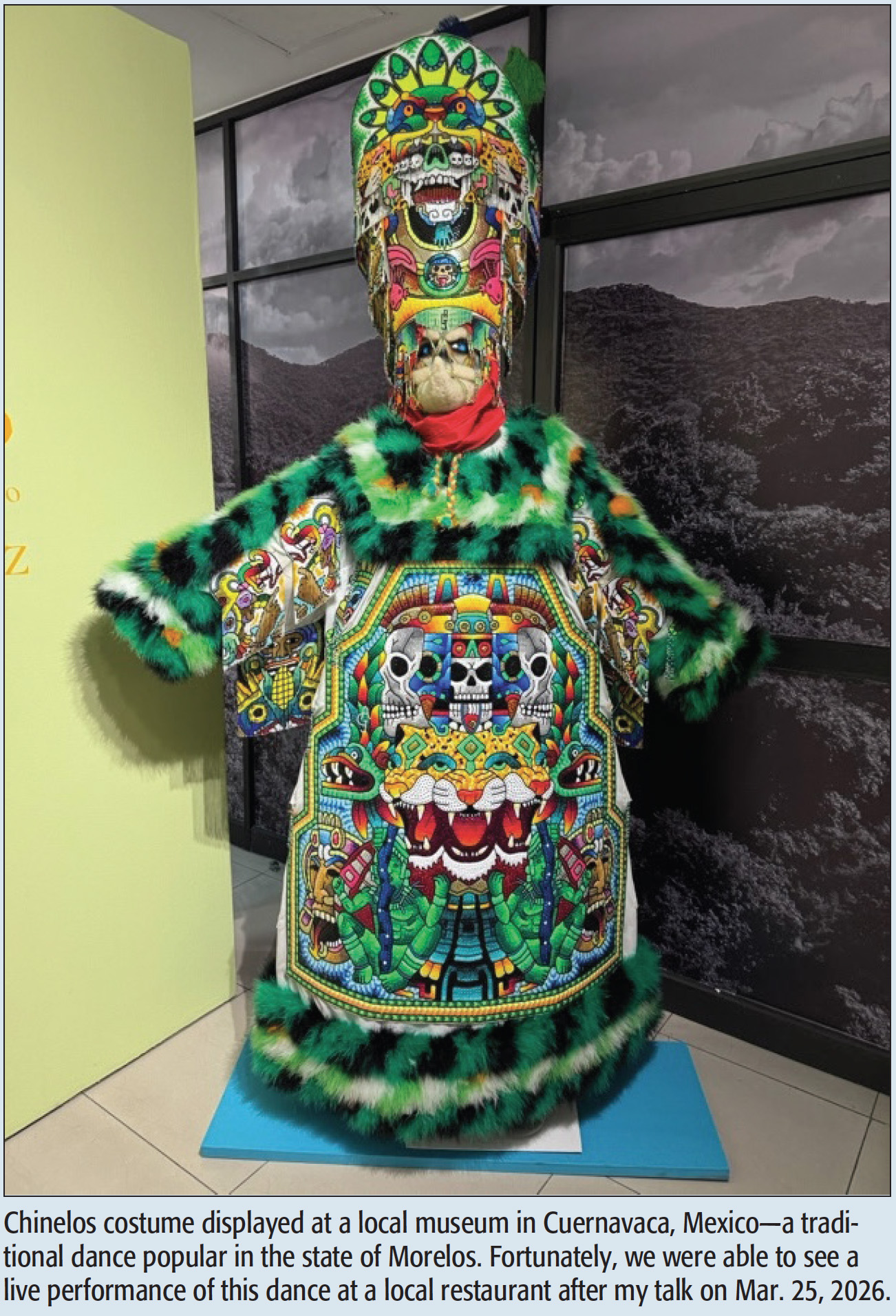
Monterrey, known as the wealthiest city in Latin America, feels like a modern U.S. city. In contrast, my next stops, Cuernavaca and Cuautla, reflected a more traditional Mexican atmosphere, just as I had read in books and seen in movies. My Morelos Chapter host, Mr. Jesus Vazquez, kindly gave me a tour of Cuernavaca, the capital of Morelos, before taking me on a long ride to Cuautla. It was a great pleasure to walk through the historic streets, parks, churches, and cathedrals, and to visit a local museum of Chinelos costumes and a bustling local market. Both Dr. Vargas-Rosales and Mr. Vazquez introduced me to authentic Mexican cuisine, which I thoroughly enjoyed at local restaurants. At a restaurant in Cuautla, we were fortunate to witness a live Chinelos dance performance—a vibrant tradition that emerged after the Spanish conquest, blending native rites with Christian festivals and humorously mocking the Europeans with their fine clothing, beards, fair skin, and mannerisms.
The Atlanta Chapter is no stranger to me, being just a 90-minute drive from my hometown, Auburn, AL. I have collaborated with several professors at Georgia Tech and am also part of the Atlanta Chapter team bidding for a future IEEE ICC conference. In September 2023, I delivered an invited talk at the IEEE Communications Society School hosted by the Atlanta Chapter at the Georgia Tech Research Institute. I also have several collaborators at Kennesaw State University, where I gave an invited talk at their IT Distinguished Colloquium Series in April 2023. It was truly a pleasure to visit again, reconnect with old friends, and meet new colleagues.
In summary, the IEEE ComSoc Distinguished Lecture Tour in Mexico and the U.S. was an exceptionally rewarding experience, blending technical knowledge sharing, engaging discussions, and rich cultural immersion. I deeply appreciated the warm hospitality and support of my hosts, as well as the ComSoc DL program officers and staff, which made travel, campus visits, and local experiences seamless and memorable. Beyond technical exchange, the tour strengthened professional connections, fostered potential collaborations, and provided an inspiring perspective on research and cultural diversity across regions.