The Internet of Things (IoT) Research Lab at Pontificia Universidad Católica de Chile (IoT-UC), supported by the IEEE Communications Society Chile Chapter, recently hosted a series of invited talks on emerging challenges in IoT connectivity, with a focus on satellite communications and advanced wireless technologies.
This seminar series reflects ongoing collaborations across academia and international research initiatives involving the IoT-UC Research Lab, led by Prof. Miguel Gutiérrez Gaitán, including DORSAL-IoT (Downlink Optimization for Robust Direct-to-Satellite IoT) and Avanza UC SCORPIO (Satellite Communications and Radiopropagation for the Internet of Things), as part of the newly established Cyber-Physical Systems Research and Technology Center (CPS-RTC), the first center of its kind in Latin America.
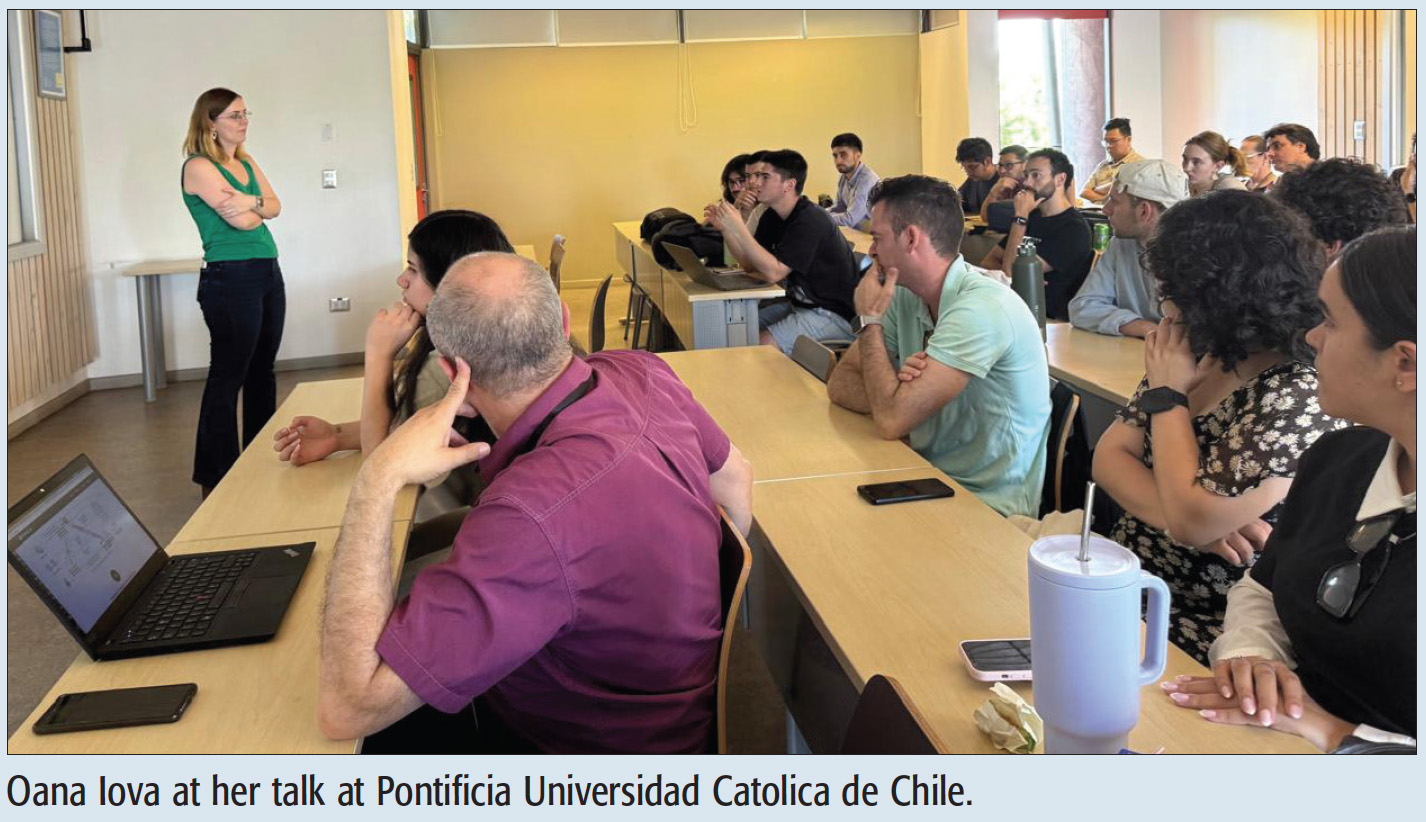
The first talk was delivered by Prof. Oana Iova (INSA Lyon, INRIA) on November 24, 2025, titled “Terrestrial and Satellite Communications for the Internet of Things: Challenges and Advancements.” The presentation discussed how LPWAN technologies such as LoRa and LoRaWAN are evolving toward satellite-enabled global coverage, highlighting key challenges and recent advances enabling energy-efficient, large-scale IoT systems. This activity was conducted within the DORSAL-IoT project, a multi-institutional initiative in which César Azurdia (U. de Chile), Diego Dujovne (UDP), Samuel Montejo (UTEM), and Juan A. Fraire and Hervé Rivano (INSA Lyon, France) also participated.
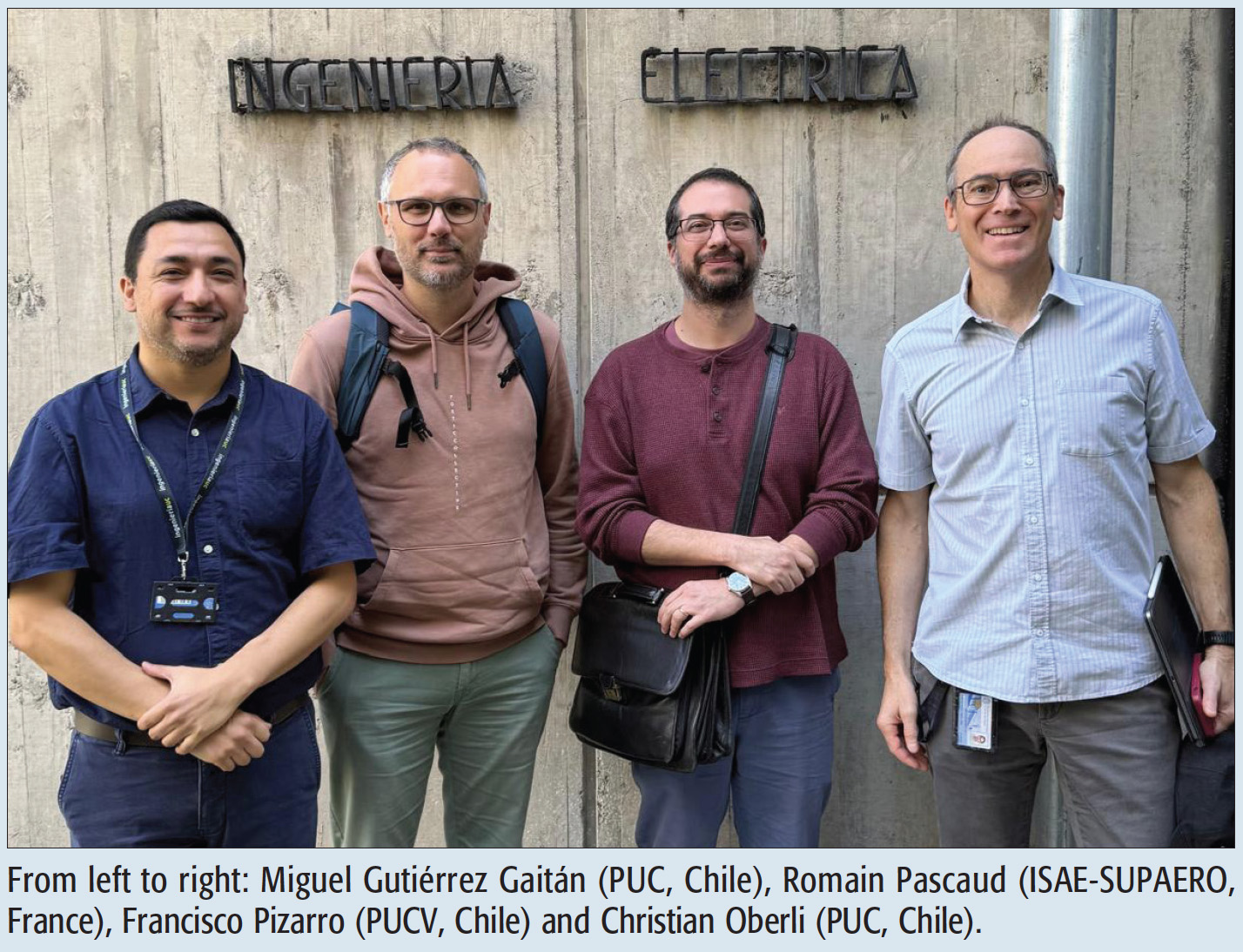
The second session, “Additive Manufacturing of Antennas for IoT and Space Communications,” was delivered by Prof. Romain Pascaud (ISAE-SUPAERO, France) on March 11, 2026. The presentation explored how additive manufacturing enables the design of complex antenna structures with controllable electromagnetic properties, opening new opportunities in antenna and microwave engineering. The session, conducted in collaboration with Prof. Francisco Pizarro (PUCV), enabled the local team to consider new antenna design options for future satellite IoT communications within the Avanza UC SCORPIO research project.
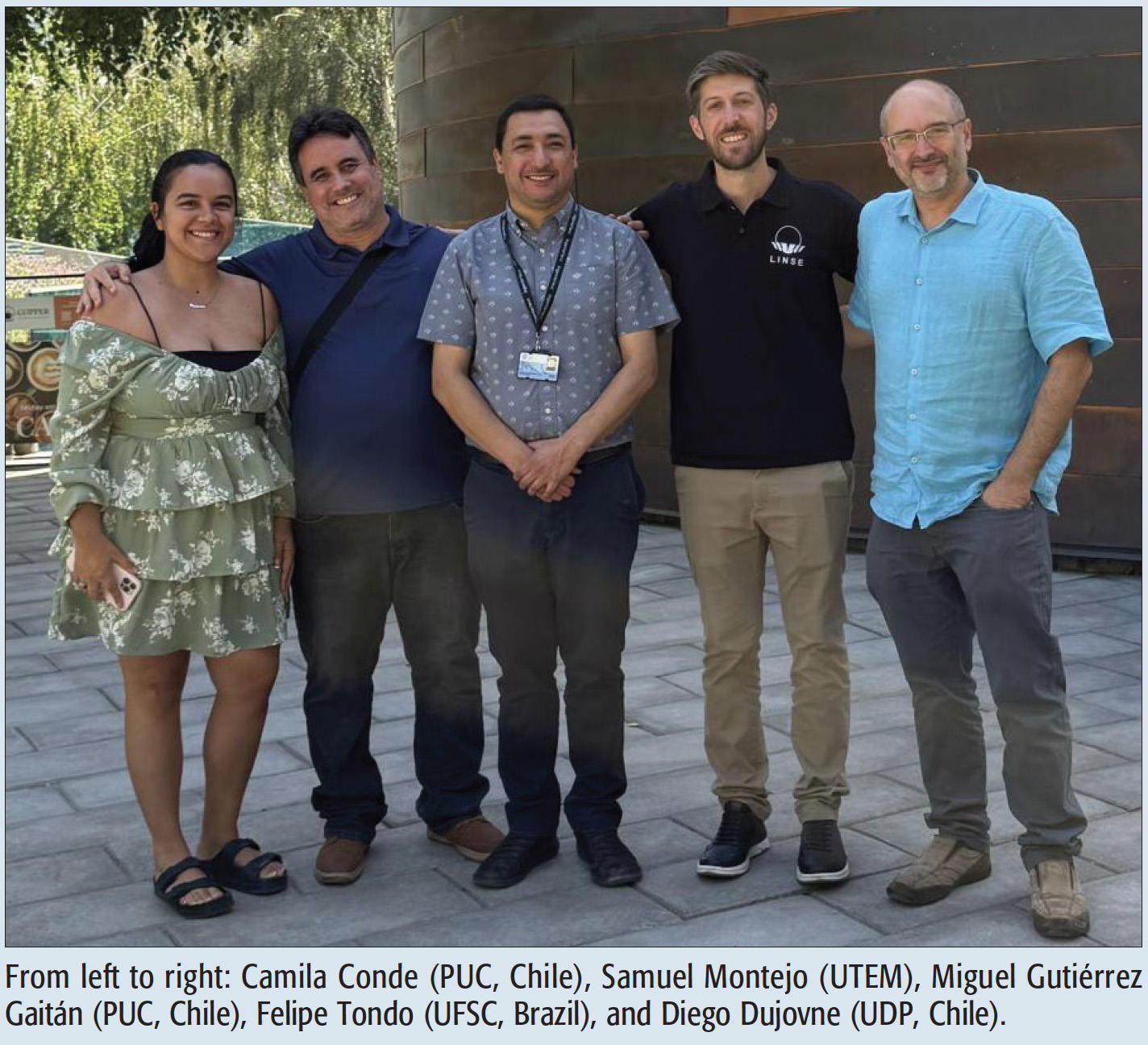
The most recent seminar featured Dr. Felipe Tondo (UFSC, Brazil), who presented the talk “Towards Scalable Uplink Access Strategies for Satellite IoT Networks” on March 13, 2026. His talk addressed scalable uplink access mechanisms for satellite IoT systems, focusing on coordination and capacity challenges. This activity was made possible by the invitation of Prof. Samuel Montejo (UTEM), as part of the joint CPS-RTC activities involving UTEM and IoT-UC, and aligns with ongoing collaborations under DORSAL-IoT and SCORPIO, with UFSC participating in both projects through Prof. Richard D. Souza.
Overall, this seminar series highlights IEEE ComSoc Chile’s role in fostering international and national collaboration, as well as its productive partnership with the IoT-UC Research Lab led by Prof. Miguel Gutiérrez Gaitán. The talks have had a strong impact on the local community, with active participation from members across multiple universities (UTEM, UDP, U. de Chile, and PUCV), engaging both undergraduate and graduate students in emerging topics in IoT and satellite communications, as well as in related research projects. These activities reflect IEEE ComSoc Chile’s success in strengthening collaboration, knowledge exchange, and community building in this rapidly evolving field.