On 16 May 2025, IEEE dedicates a new Milestone: Project Echo, Telstar, and Discovery of Cosmic Background Radiation, 1959–1965, with a plaque that reads.
“In 1959–1960, NASA and AT&T developed a satellite Earth station in Holmdel, NJ, including a novel tracking horn-reflector antenna, maser preamplifier, and FM demodulator. The Earth station demonstrated the first high-quality long-distance voice circuit via the Echo passive communication satellite in 1960–1961, and via the active Telstar communications satellite in 1962–1963. Experiments conducted in 1964–1965 provided the first indication of the cosmic background radiation associated with the Big Bang.”
(W. C. Jakes, Jr., “Participation of Bell Telephone Laboratories in Project Echo and Experimental Results,” Bell Labs Technical Journal, Volume 40, Issue 4, July 1961, pp. 975–1028; ] R. H. Dicke, P. J. E. Peebles, P. G. Roll, & D. T. Wilkinson, “Cosmic Black-Body Radiation,” Astrophysical Journal, vol. 142, May 7, 1965, p.p 414–419; A. A. Penzias and R. W. Wilson, “A Measurement of Excess Antenna Temperature at 4080 Mc/s,” Astrophysical Journal, vol. 142, 1965).
The 61st Anniversary of the first measure of cosmic microwave background (CMB) radiation by Dr Arno Allan Penzias and Dr Robert Woodrow Wilson will be recognized at AT&T Labs Middletown, New Jersey (NJ) on 20 May 2025.
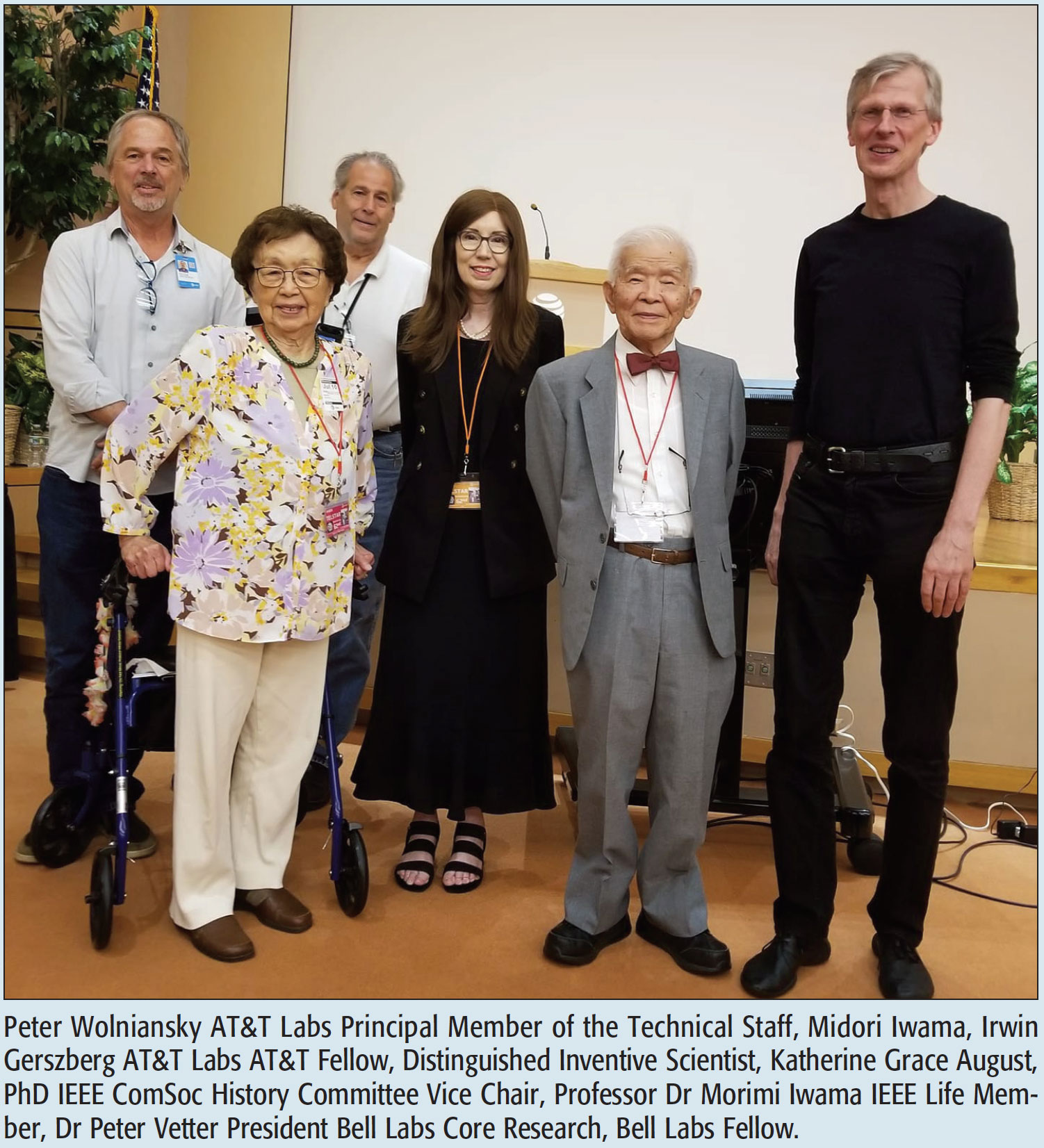
Previous related events include the 62nd Anniversary of the 1962 launch of Telstar on 12 July 2024 with one of the original project team members, Dr Morimi Iwama, and his family (Bell System Technical Journal: Volume 42, Issue 4, July 1963, Pages 739-1934; Telstar I, NASA SP-32 Volume 4, Dec. 1965, Pages 1941-2373). There were presentations by Irwin Gerszberg, AT&T Labs, New Jersey Inventors Hall of Fame, Dr Timothy Lee, IEEE-USA President and Boeing Technical Fellow, Dr Peter Vetter, Nokia President, Bell Labs Core Research, and Dr Morimi Iwama, himself, among others. There was a memorable tour of the AT&T Science and Technology Innovation Center and Museum by AT&T Archives Manager Melissa Knoll, CA, and Docents Dr Giovanni Vannucci, Dr Peter Wolniansky, and Dr Thomas M Willis III.
On 20 May 2024 we celebrated the 60th Anniversary of the first measure of Cosmic Microwave Background (CMB) Radiation. Experiments conducted in 1964-1965 provided the first indication of the cosmic background radiation associated with the Big Bang, which changed the way we understand the very nature and origins of our Universe. Dr Robert Woodrow Wilson, himself a 1978 Nobel Laureate, his family, friends, and the community participated. Held at AT&T Labs in Middletown, NJ, presentations were by Dr Doug Zuckerman, IEEE ComSoc History Committee Chair, Irwin Gerszberg, Dr Peter Wolniansky, Dr Peter Vetter, Dr Giovanni Vannucci, and Dr Robert Woodrow Wilson. High Tech High School physics students, Holmdel School Students, and their teachers attended. Holmdel Township representatives and legislators, who had previously dedicated the Crawford Hill Antenna site to be “Robert Wilson Park” on 20 April 2024, were also in attendance. Holmdel High School students and their teachers created remembrance key rings in the image of the Horn Antenna with the two Astronomers.
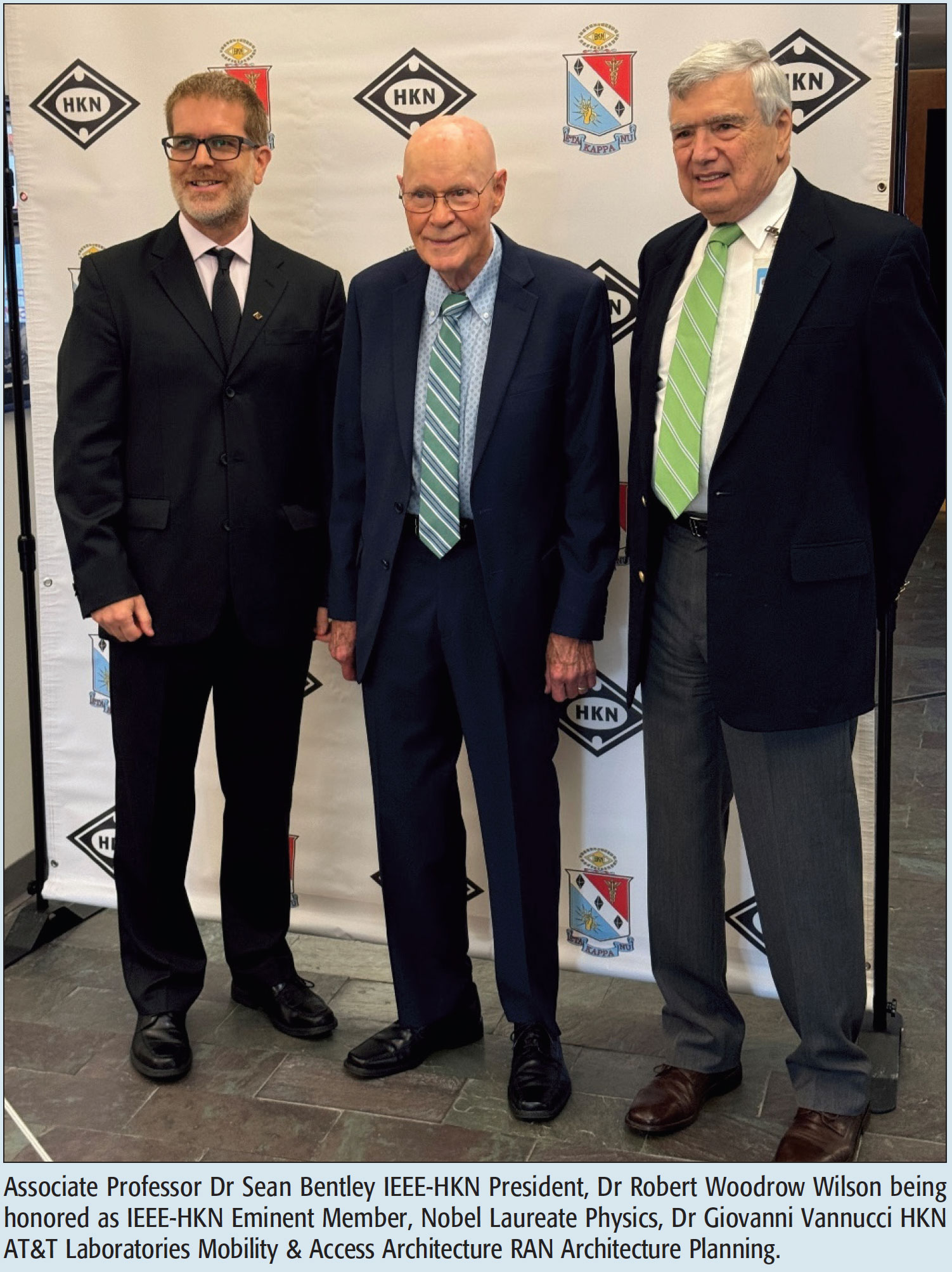
On 17 September 2024, we celebrated the recognition of Dr Robert Woodrow Wilson as IEEE-HKN Eta Kappa Nu Eminent Member and Dr Arno Alan Penzias as IEEE-HKN Eta Kappa Nu Honorary Eminent Member (https://hkn.ieee.org/awards/eminent-member-recognition). The Ceremony took place at AT&T Labs in Middletown, NJ. Museum tours were directed by Melissa Knoll, CA; presentations included Dr Sean Bentley, IEEE-HKN Eta Kappa Nu President, Dr Giovanni Vannucci, Dr Gregory Wright, Dr Robert Woodrow Wilson, and more. The cake was delicious.
The Milestone Project Echo dedication is one of many that will be celebrated around the globe during the 100th Anniversary of Bell Labs. One can hardly imagine the history of technology or our society without the contributions of Bell Labs and related companies. Certainly, IEEE, the communication industry, and many other fields of technology have their very roots in the inventions and innovations of Bell Labs. The founders, Alexander Graham Bell and his wife Mabel Gardiner Hubbard Bell, dedicated their lives to advancing technology for humanity. They are remarkable role models known for infusing their passions into the traditions of Bell Labs (https://ethw.org/Alexander_Graham_Bell). Many IEEE programs now focus on the K through industry STEM pipeline, and lifelong learning connecting all ages toward the goal of advancing technology for humanity. Recognizing history is enhanced by IEEE Role Models: Celebrating 100 Years of Bell Labs.
The backdrop of this Milestone is the mid-twentieth century, when political conditions were motivating significant government investments in high-quality non-terrestrial communication for resilience and sustainability (https://ethw.org/Milestones:List_of_IEEE_Milestones). Terrestrial communication was limited then, and methods were vulnerable to natural and man-made disruptions. The Soviet Union’s launch of Sputnik I escalated the urgency for a program to address non-terrestrial communication, an essential humanitarian mission. A series of major programs was initiated by the government and commercial laboratories, including Bell Telephone Laboratories at Holmdel, NJ.
One outcome from among the various projects was the unique Horn Antenna, which was part of Project Echo, and Telstar’s proof of the concept for practical satellite communication. The work had multiple goals, not constrained by industry alone. Such non-terrestrial communication was seen as important for resilience in the event of terrestrial disturbances, including but not limited to natural disasters, conflict, and terrorism. Multiple innovations in novel technologies, including but not limited to transistors, solar power, computing, recording, measurement, and systems redundancy, were necessary to realize these goals. The excellence and precision of the initial satellite tracking systems led to rapid and practical success. Because of this dedication to precision methods, processes, and instruments beyond those traditionally focused on business needs, the history-making communication achievements and transformative radio astronomy discoveries were made possible.
In the years since Project Echo and Telstar, many innovations have been essential to advancing satellite technology for humanity. Purposes are wide and growing, including uses for agriculture, weather, intelligence, information, location, navigation, disaster response (earthquakes, hurricanes, conflicts), and telehealth. These early experiments demonstrated practical satellite communications: passive communications across the continent with Project Echo, and active communications between continents across the Atlantic with Telstar.