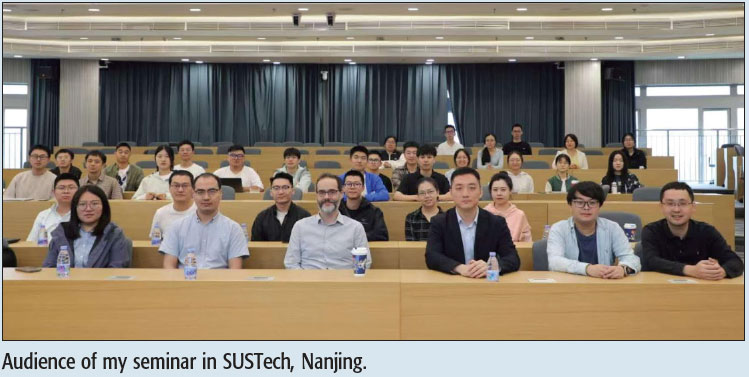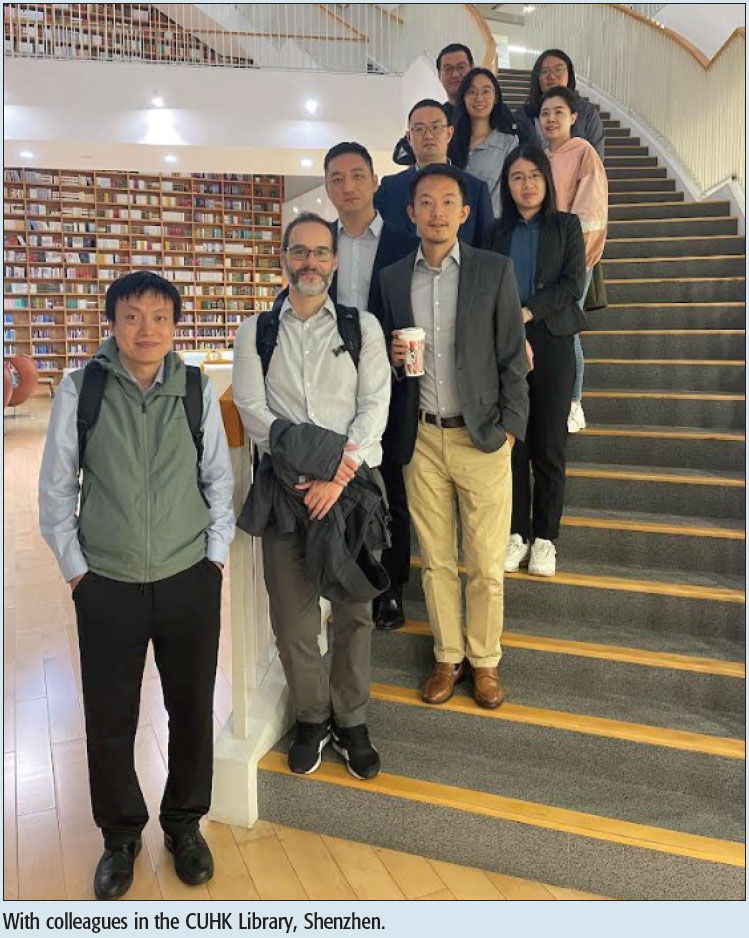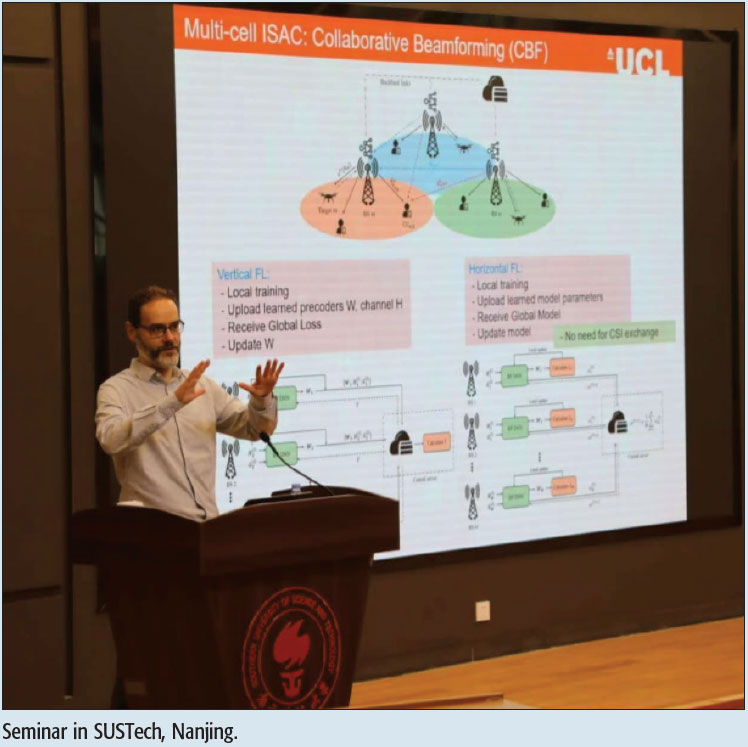
I was privileged to complete the IEEE ComSoc Distinguished Lecture Tour (DLT) to China in early November 2024. This experience was profoundly rewarding on several levels. I was excited to share my expertise with scientists and research students across renowned universities. The discussions during my talks provided highly insightful ideas that enriched my research perspectives. Beyond the academic and professional aspects of the tour, the opportunity to immerse myself in the historical and cultural significance of the cities I visited made the experience truly unforgettable.
As part of the DLT, I delivered four lectures at different universities and institutions, each focusing on the critical importance of sustainable wireless technologies for the future of 6G and beyond. The details of the talks are as follows:
Talk 1: Southern University of Science and Technology (SUSTech), Nanjing, hosted by Prof. Fan Liu, on November 19, 2024
Talk 2: Chinese University of Hong Kong (CUHK), Shenzhen, sponsored by Prof. Jie Xu, on November 19, 2024
Talk 3: Southeast University, Nanjing, hosted by Prof. Jin Shi, on November 20, 2024
Talk 4: Huawei Technology, Shanghai Lab, hosted by Dr. Yuanjie Li, on November 22, 2024
The central theme of each lecture revolved around Sustainable Multi-Access and Multi-Functional Wireless Networks, a key technology for the 6G era and beyond. I began each session by discussing the fundamental role of sustainability in developing future wireless networks, emphasizing the need for technologies that balance environmental impact, resource efficiency, and network performance. I then provided a comprehensive overview of physical-layer approaches to sustainability, covering topics such as Integrated Sensing and Communications (ISAC), energy-efficient transmission, and security solutions. I concluded each talk by addressing the significant challenges we must overcome to integrate these technologies effectively in the coming decades.
In each lecture, I also took the opportunity to introduce IEEE ComSoc to the audience and promote the relevant Technical Working Groups (TWGs), which generated positive interest among attendees.
I was particularly pleased with the level of engagement from the audience. Each talk attracted over 40 participants, comprising academic staff members and research students. The discussions following my talks were extremely stimulating, often leading to insightful exchanges that offered new perspectives on sustainable technologies and the future of 6 G. For example, at SUSTech, I had an in-depth conversation about the challenges associated with synchronization for distributed ISAC. At CUHK, I delved into the security issues surrounding sustainable wireless networks, while at Huawei’s Shanghai Lab, I discussed practical approaches to symbol-level precoding. These discussions provided valuable insights and sparked several new research ideas I plan to explore in my future work.
Beyond the academic talks, my tour also allowed me to reconnect with some former students, now faculty members at various universities across China. This was a truly heartwarming experience, as I could catch up with them and see their progress in their respective fields.
During my visit to Nanjing, I had the opportunity to explore some of the city’s historical landmarks. I spent a day visiting the iconic Nanjing City Wall and the Nanjing Museum, both of which offered a fascinating glimpse into the region’s rich history and culture. While I didn’t have time for sightseeing in Shenzhen and Shanghai due to my packed schedule, I did visit the impressive University Library at CUHK, a notable highlight of my time in the city.
Reflecting on the overall experience, I can confidently say that the DLT program was an outstanding opportunity to promote cutting-edge technologies relevant to IEEE ComSoc, foster academic research, and build collaborative networks through in-person exchanges. The exposure to different perspectives and ideas from fellow researchers and students was invaluable, and I believe it will have a lasting impact on my work.
The tour also offered a unique chance to experience the warmth and hospitality of the local communities in China, further enriching the academic exchange. I would highly recommend the IEEE ComSoc Distinguished Lecture program for any researcher looking to expand their professional network and gain a deeper understanding of global advancements in wireless communication technologies.