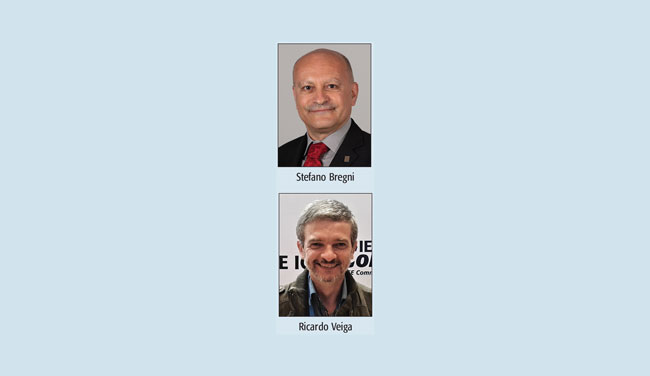
This article continues the series of interviews with the Officers of the IEEE ComSoc Member and Global Activities (MGA) Council for the term 2026–2027, published every month in the Global Communications Newsletter.
In this series of interviews, I introduce the Vice-President and the six Directors on the MGA Council (namely: Member Services, Industry Outreach, and AP, NA, LA, EMEA Regions), as well as the three Chairs of the Women in Communications Engineering (WICE), Young Professionals (YP), and Sister Societies Standing Committees. Additionally, I will introduce the Chair of the Communications History Committee, aligned under the Technical and Educational Activities Council. In each interview, they present their sector activities and plans one by one.
In this issue, I interview Ricardo Veiga, IEEE ComSoc Director of Member Services (2026–2027).
Ricardo is a Full Professor at Universidad de Buenos Aires and is responsible for Planning and Management Control at the Faculty of Engineering and Director of the Electronic Engineering program. He has also been working in the communications industry for more than 25 years, participating in the start-up of several companies. He was a member of the ComSoc Board of Governors as Member-at-Large and Regional Director. He also served as Chair of the ComSoc Argentina Chapter, and under his leadership, his chapter received the Chapter Achievement Award. He also received the ComSoc Latin America Region Distinguished Service Award, the IEEE RAB Achievement Award, and the IEEE Third Millennium Medal, among others.
Stefano: Hello, Ricardo! Would you like to begin by giving our readers a brief introduction to ComSoc Member Activities?
Ricardo: ComSoc has experienced remarkable growth since the pandemic. In response, our team adapted quickly and focused on meeting the evolving needs of our members, regardless of their location. Despite the uncertainty of those years, we successfully launched several new programs that have delivered significant value to our community. Through careful strategic planning and the implementation of targeted initiatives aligned with our mission, ComSoc membership increased from 30,000 members in February 2022 to more than 45,000 in February 2026 — an impressive 50% growth in just four years.
I would also like to recognize my predecessor, Ranga Rao Venkatesha Prasad, whose leadership was instrumental in expanding our Student Branch Chapter network from 262 Chapters in January 2024 to 379 Chapters by January 2026 — a remarkable 44% increase in only two years.
At the same time, we witnessed the rapid emergence of artificial intelligence tools, particularly large language models (LLMs), placing an unprecedented wealth of knowledge at everyone’s fingertips. Yet, while access to information has become easier than ever, one of our members’ greatest needs continues to be meaningful human interaction and professional networking. This is why our Chapters — and especially our Student Branch Chapters — remain at the heart of ComSoc. They provide opportunities to learn from peers, build professional relationships, develop leadership skills, and create vibrant technical communities. Many of our programs are specifically designed to strengthen these connections, reinforcing the sense of belonging that makes ComSoc much more than a source of technical information.
Stefano: Would you please summarize what the Member Services Board is and what its mission and scope of interests are?
Ricardo: The Member Services Board (MSB) is responsible for overseeing IEEE Communications Society programs and services that support individual members and Chapters worldwide. Reporting to the Member and Global Activities Council (MGA-C), the Board develops initiatives focused on membership recruitment, retention, renewal, recognition, professional development, Chapter support, industry engagement, and leadership development. It works closely with the four Regional Directors and ComSoc staff to implement these programs globally.
Within the Member Services Board, we focus on addressing regional needs by supporting both existing and prospective Chapters, while promoting the participation of women and young professionals in ComSoc activities and leadership. Although the Board already maintains a balanced diversity in terms of geography, gender, age, and professional background (academia and industry), we have expanded its membership to provide the expertise and capacity needed to develop and implement the Society’s growing portfolio of member service initiatives.
All of these programs and activities are handled in collaboration with the four ComSoc Regional Directors:
-
Angela Yingjun Zhang (Asia/Pacific, AP);
-
Stefano Giordano (Europe, Middle East, and Africa, EMEA);
-
Yessica Saez (Latin America LA);
-
Newman Wilson, North America (NA).
Members of ComSoc Staff, namely Trish Jaraicie, Cindy Tiritilli, Diane Turton, Bruce Worthman, and others, are key pillars for the success of these programs.
Stefano: What are the main activities of you and the Board for this year?
Ricardo: One of the flagship programs supporting ComSoc Chapters worldwide is the Distinguished Lecturer (DL) Program. This initiative enables Chapters to invite internationally recognized experts to deliver high-quality technical presentations.
The program includes the Distinguished Lecturer Tour (DLT), through which a Distinguished Lecturer visits several Chapters or cities during a single trip, maximizing both impact and cost-effectiveness. It also includes the Virtual Distinguished Lecturer (Virtual DL) program, allowing Chapters to jointly organize online lectures and reach audiences around the world without travel constraints.
Beyond the DL Program, the Member Services Board manages several initiatives designed to strengthen Chapters, engage members, and foster collaboration across regions:
-
Twin Chapter Program, which promotes partnerships between well-established and developing Chapters to exchange best practices and encourage joint activities.
-
Mentoring Program, connecting students, Young Professionals, and experienced volunteers to support career development, technical growth, and volunteer leadership.
-
Student Career Fair, helping students interact with industry representatives, explore career opportunities, and develop professional skills.
-
Student Leadership Activities, aimed at developing leadership capabilities among Student Branch Chapter officers and volunteers.
-
Student Ambassador Program, creating a global network of student representatives to promote ComSoc membership and facilitate communication between students and the Society.
-
Communications for All, a flagship IEEE ComSoc initiative that promotes inclusive, resilient, and sustainable connectivity by supporting real-world communications deployments, education and capacity building, mentoring, and collaborative activities among Chapters, Student Branch Chapters, Technical Committees, industry, and local communities, with a particular focus on underserved and developing regions.
Stefano: The Student Competition “Communication Technology Changing the World” is one of the most successful initiatives run by ComSoc for students. Nelson Fonseca and I launched it in 2013. Since then, it has been run every year and has consolidated as one of the main MGA Programs in ComSoc. Last year, we received more than 100 submissions from all over the world! Would you please describe its focus and requirements for participation?
Ricardo: The competition recognizes students, or teams of students, who demonstrate the ability to improve people’s lives through the application of communication technology by developing innovative projects with the potential to contribute to a better future.
It is open to undergraduate and graduate students worldwide. The team leader must be an IEEE ComSoc Student or Graduate Student Member. In contrast, team members may come from any country or region and may include non-members, subject to the competition rules. Projects are evaluated based on originality, creativity, technical merit, practical results, and potential social impact. The competition is now open for this year’s submissions, and we warmly encourage all eligible students to submit their projects and showcase how communications technology can help change the world!
Stefano: What about the Chapter Awards and funding?
Ricardo: IEEE Communications Society (ComSoc) has more than 220 Chapters worldwide and recognizes outstanding Chapter performance through four Regional Chapter Achievement Awards (RCAA) and one Chapter of the Year Award (CoYA). These awards honor Chapters that provide exceptional value and high-quality services to their members while demonstrating excellence in technical activities, membership development, and volunteer engagement.
For the 2026 awards cycle, the evaluation criteria will remain the same as those used last year. Beginning in 2027, however, new evaluation criteria will be introduced to better recognize the diverse and outstanding contributions made by Chapters around the world and to more accurately reflect the breadth and impact of their activities.
Additionally, to recognize and reward outstanding Student Branch Chapters, we have established the ComSoc Student Branch Chapter Award. Presented annually in each ComSoc Region, the award recognizes excellence in technical activities, student engagement, leadership, and membership development.
The Chapter & Student Branch Chapter Funding Program provides annual financial support to ComSoc Chapters and Student Branch Chapters to promote high-quality technical activities, membership development, and member engagement, subject to established eligibility, reporting, and approval procedures.
Stefano: What’s next? Any new membership services that you are planning for in 2026/2027?
Ricardo: In addition to those well-established programs, we are actively developing several new initiatives this year to enhance the value of ComSoc membership further. Some of these initiatives are expected to launch this year, while others will require additional planning and pilot implementations before full deployment.
Among the proposed initiatives, there are:
-
Student Project Awards: supporting innovative projects involving satellites, CubeSats, drones, Internet of Things (IoT), wireless communications, and other emerging technologies.
-
Additional publication benefits, including the possibility of increasing the number of complimentary publication pages available to student members.
-
Ten free IEEE Xplore paper downloads per year, providing members with direct access to a selected number of research articles as an enhanced membership benefit.
-
Additional free course, expanding access to high-quality technical education and professional development resources.
-
Regional Impact & Leadership Program (RILP): A globally coordinated, regionally implemented initiative that complements the Distinguished Lecturer Program by empowering regional technical leaders and role models to deliver technical, professional, mentoring, and leadership activities in collaboration with ComSoc Chapters and Student Branch Chapters.
-
Communications Capture the Flag (CTF), a global competition focused on Software Defined Radio (SDR), wireless communications, and signal processing, combining virtual and in-person challenges.
-
Global Amateur Radio Network for ComSoc Student Branch Chapters, connecting Student Branch Chapters worldwide through amateur radio to promote international collaboration, hands-on learning, emergency communications awareness, and global friendship among future communications engineers.
-
Technical Committees (TCs) and Chapters Initiative, aimed at increasing collaboration between Technical Committees and Local Chapters through joint technical events, regional representatives, and stronger volunteer engagement.
-
IEEE ComSoc Day, an annual worldwide celebration of communications technologies, brings together Chapters, Student Branch Chapters, members, and volunteers through coordinated technical, educational, and outreach activities.
Together, these initiatives aim to increase the value of ComSoc membership, strengthen Chapters and Student Branch Chapters, foster international collaboration, support technical and leadership development, and attract the next generation of communications engineers. They reflect the Society’s commitment to continually evolving its member services to address the changing needs of students, professionals, industry, and academia worldwide.
Stefano: Excellent! So many new and well-established initiatives! A final remark to conclude this interview?
Ricardo: We have demonstrated that we are well prepared to meet today’s challenges. Our next responsibility is to anticipate our members’ future needs and respond with innovative programs, services, and opportunities that continue to enhance the value of ComSoc membership.
With the commitment of our dedicated volunteers, the support of our staff, and a shared vision of serving both our members and society, I am confident that together we will continue to grow, innovate, and make a meaningful difference for the global communications community.
Thank you, Stefano, for helping us to share our work and ideas, and also thanks to the VP-MGA, Abbas Jamalipour, and the President, Nelson Fonseca, for their strong support.