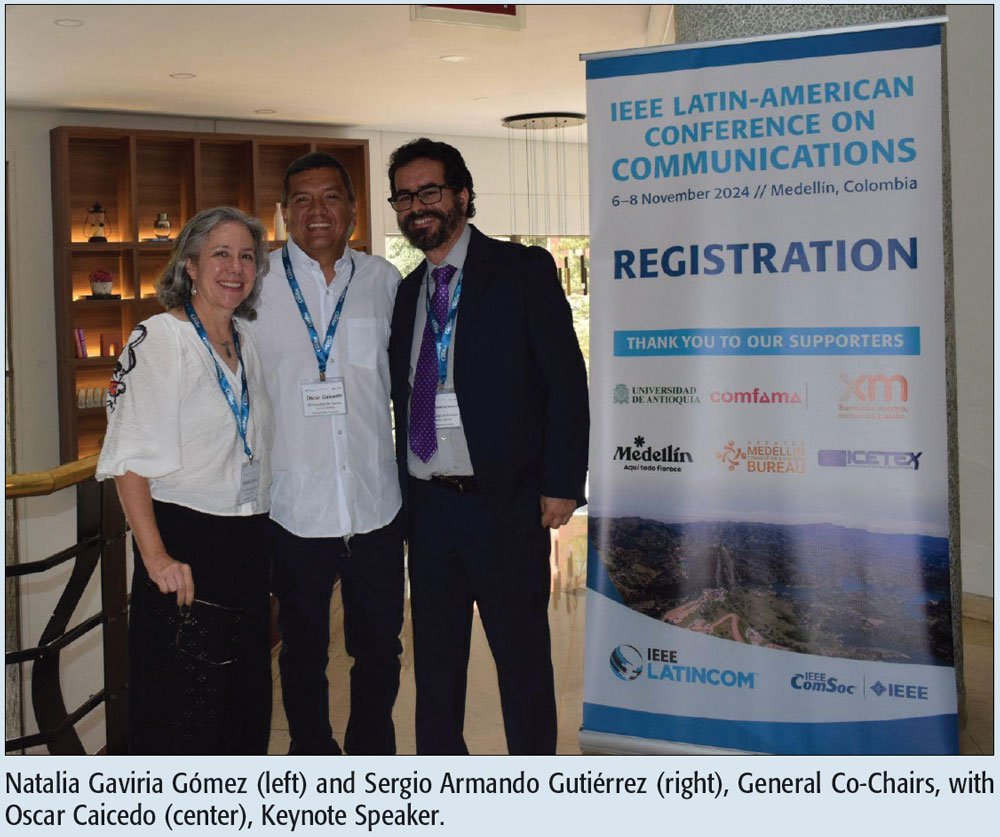
LATINCOM 2024 Is Back To Medellin Seven Years After Last Time In The City And Fifteen Years After Its Creation
Medellin, the second most important city in Colombia, district of Science, Technology and Innovation welcomed IEEE LATINCOM 2024 between November 6 to 8. In this city, where the conference was held for the first time fifteen years ago, IEEE ComSoc and Universidad de Antioquia organized this year’s edition that brought together researchers, students, and industry practitioners from various sections of the Communications and Networking field.
The response to the call for papers at the conference was strong and wide, making this edition substantially diverse as signified by the submission of 98 works from various countries around the world. In addition to an important Latin American representation, the program also included papers submitted from North America, Asia, and Europe.
Conference Facts and Statistics
The conference received 98 submissions. After an exhaustive review process, 49 papers were accepted for an acceptance ratio of 50%. We had 83 active TPC members that contributed 329 total reviews with an average of 4 reviews per member.
The authors of the papers came mainly from Latin American countries such as Brazil, Colombia, Chile, and Ecuador. However, the conference had submissions from all over the world, receiving papers from Belgium, Canada, Chad, France, Italy, Japan, and Spain, among other countries, confirming the growth of IEEE Latincom internationally which enables it to reach a broad and diverse public.
The topics that attracted the most submissions were: “Mobile and Wireless Networking,” “Selected Areas in Communications,” “Communication QoS, Reliability and Performance,” and “AI, Big Data and ML for Networking.” This fact shows the importance of the transition to 6G technologies and the integration of network management technologies with automation that can be implemented using AI/ML techniques.
Keynotes
IEEE LATINCOM 2024 had the honor to include in its technical program four keynote speeches delivered by top researchers in different fields of Communications.
From Colombia, Professor Oscar Caicedo presented advances in the applications of Large Language Models, an innovative approach to Artificial Intelligence, in the context of Network Management. From Canada, Professor Sandra Cespedes presented her pioneering work on Interplanetary Networking, covering different challenges that communication networks face in the context of multi-satellite infrastructures.
From Türkiye, Professor Sinem Coleri, who is also a member of the ComSoc Distinguished Lecturer program, introduced her recent research and development efforts in the context of explainable and generative AI in 6G networks.
Finally, from Belgium, Professor Steven Latré, Vice President of Research and Development at Imec, wrapped up the keynote sessions with his presentation on the transformations that Machine Learning represents for computer networks.
These enlightening keynote presentations addressed important and relevant topics at the forefront of the state-of-the-art and put forward the challenges that will drive the research and development in the communications and networking field in the near future.
Panels
IEEE LATINCOM included in its program two panels that enabled discussion spaces between industry and academia.
On the one hand, the IEEE WICE/YP (Women in Communications Engineering / Young Professionals) panel addressed challenges in telecommunications covering topics from the introduction of Artificial Intelligence, the recent cybersecurity threats, and novel countermeasures, to the overall opportunities driven by 5G.
On the other hand, the panel on Cybersecurity on Critical Infrastructures enabled an interesting discussion and ideas exchange from the perspectives of industry, academia, and representatives of a company operating the electrical infrastructure in Colombia.
Tutorials
From the perspective of providing hands-on demonstrations of state-of-the-art topics, the conference included two tutorials. On the one hand, Professor Jose Brenes and Adrián Lara, from Universidad de Costa Rica introduced traffic monitoring from home assistants, a relevant topic from the context of understanding IoT traffic.
On the other hand, Professor Miguel Camelo from the University of Antwerp presented the development of digital twins by using Graph Neural Networks, an important artifact that enables research and experimentation at large scale in computer networks.
Technical Sessions
Out of the 98 submissions received due to the wide acceptance of the conference Call for Papers, 49 papers were selected after a rigorous review process performed by the Technical Program Committee.
These 49 papers were organized in 12 technical sessions delivered during the three days of the conference, including topics such as Security, Applications of Artificial Intelligence and Machine Learning in the context of Computer Networks, Tools, Sensors and Vehicular Networks, Cloud Computing Reliability and Optical, Wireless and Mobile networks, from Physical and Access Layers to Infrastructure. 48 of the submitted papers had oral presentations with important attendance and constructive questions that contributed to enlarging the understanding of the presented work and highlighting the relevance of the respective contributions.
The best paper of the conference was in the area of Vehicular Networks, achieving an outstanding evaluation from the reviewers.
Welcome Reception and Banquet
The main venue of the conference was the Four Points Sheraton Hotel in Medellin. In this same place, the conference had a welcome reception on the first day of the conference. This was an important social networking space that allowed a productive interaction among the attendees, the keynote speakers, and the researchers who enriched the conference with their presence.
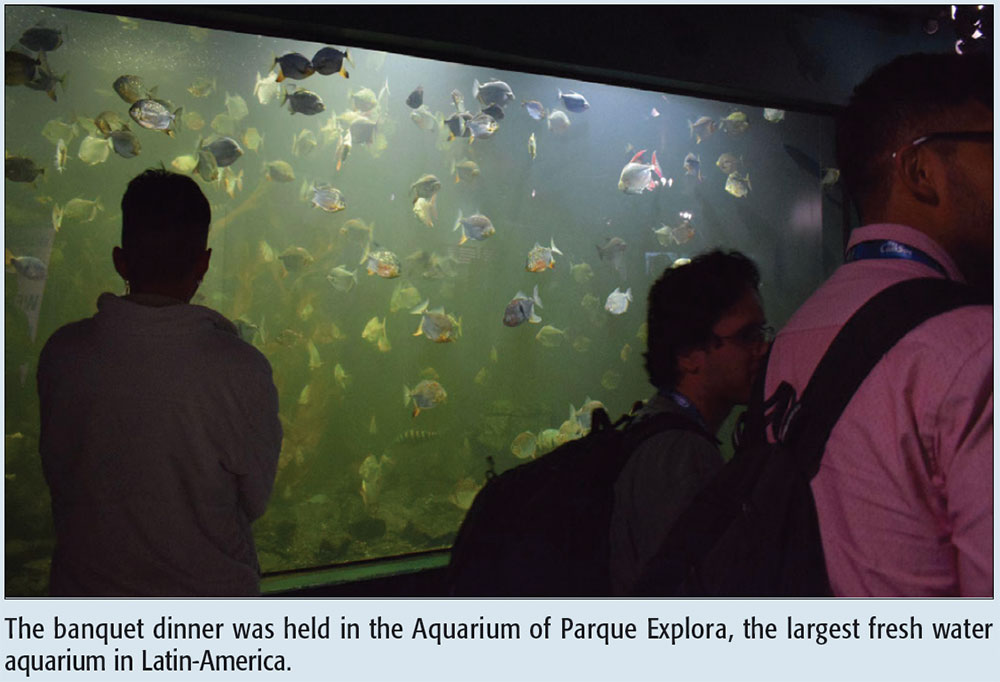
Also, to provide a memorable experience to the participants of IEEE LATINCOM 2024, the organizing committee chose as venue for the Banquet the Aquarium of Parque Explora. This facility, which is the largest freshwater aquarium in Latin America, contains a wide set of fauna from the main rivers of Colombia, including fishes from the Amazonas River. This aquarium is one of the most noticeable and outstanding venues in Medellin, remarking the vocation of the city to science and innovation. The attendees have the opportunity to spend a networking space, while enjoying the dinner, in one of the most attractive places in the City.
Conclusion
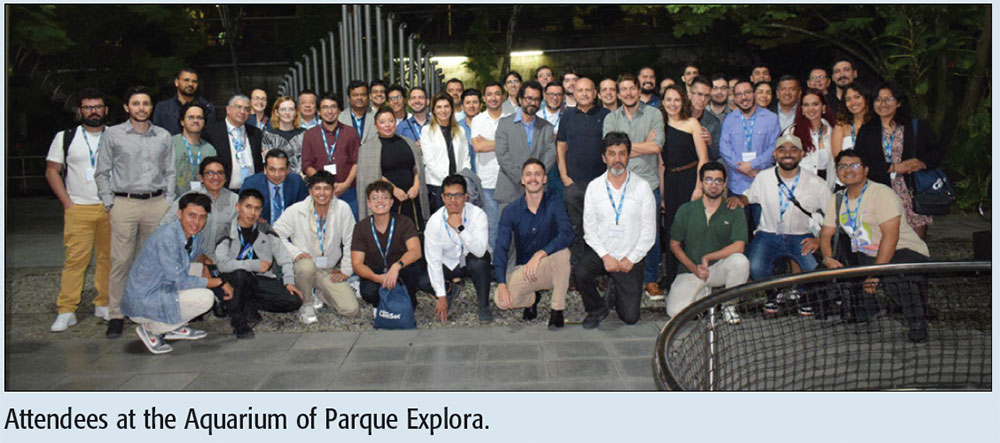
LATINCOM 2024 has been an opportunity to confirm the potential of the Latin-American community to generate high-quality research in the communications and networking field. This edition provided a relevant forum for the exchange of ideas among researchers and students from different countries and made it possible to obtain an overview of the most relevant topics and challenges that are shaping the area.
For the organizing committee and Universidad de Antioquia, it was an honor to have this opportunity to hold the conference, trusting it boosts further innovations and contributions, based on the cooperation links developed in this space.