I completed an IEEE ComSoc Distinguished Lecture Tour (DLT) to Mexico and Guatemala in the last week of October and the first week of November 2025. The experience was highly rewarding, offering the opportunity to share my research, exchange ideas for open problems in the area of non-terrestrial networks with faculty members and students, and promote IEEE ComSoc to new audiences across multiple institutions. This tour opened promising avenues for future networking and collaboration with colleagues, enabling new joint research opportunities and student exchange programs.
I gave talks on different aspects of non-terrestrial networks, namely: Backhaul-related Security Concerns in Non-Terrestrial Networks, Role of Communication Systems for Space Domain Awareness, Towards Secure and Sustainable Non-Terrestrial Networks to Bridge Earth and Space.
Talks
My talk was the following:
-
Universidad Autónoma de San Luis Potosí, hosted by Dr. Carlos A. Gutiérrez — October 31, 2025
-
Tecnológico de Monterrey, hosted by Dr. Cesar Vargas-Rosales — November 3, 2025
-
IEEE LATINCOM 2025 (Opening Keynote), Antigua, Guatemala, hosted by Dr. Marco Antonio To — November 5, 2025
For the first two talks, approximately 15 attendees per talk (including academic staff and students). The talks are recorded for students’ later access. The LATINCOM opening keynote attracted a large international audience of researchers, practitioners, and IEEE leaders, with approximately 50 attendees.
The discussions mainly focused on challenges and solutions for securing backhaul links for hybrid satellite (mostly low Earth orbit (LEO), air, and stratospheric platforms (including drones, aeronefs, and high-altitude platform stations (HAPS)) and their integration with terrestrial networks against spoofing, jamming, and gateway misconfigurations. This led to a lively discussion on the importance of secure feeder-link architectures for future large-scale constellations.
Sustainability considerations and the growing challenge of space debris in densely populated orbital regions are elaborated. Opportunities for integrating communication and sensing functions are also discussed to enhance Space Domain Awareness (SDA) across LEO, MEO, GEO, and also including emerging cislunar environments. Participants were particularly interested in how multi-layer architectures and interference monitoring can autonomously support reliable SDA operations.
Opportunities for student exchange programs, internships, and collaborative research activities between Polytechnique Montréal and the Universidad Autónoma de San Luis Potosí and the Tecnológico de Monterrey are also explored.
St Louis Potosí, Mexico
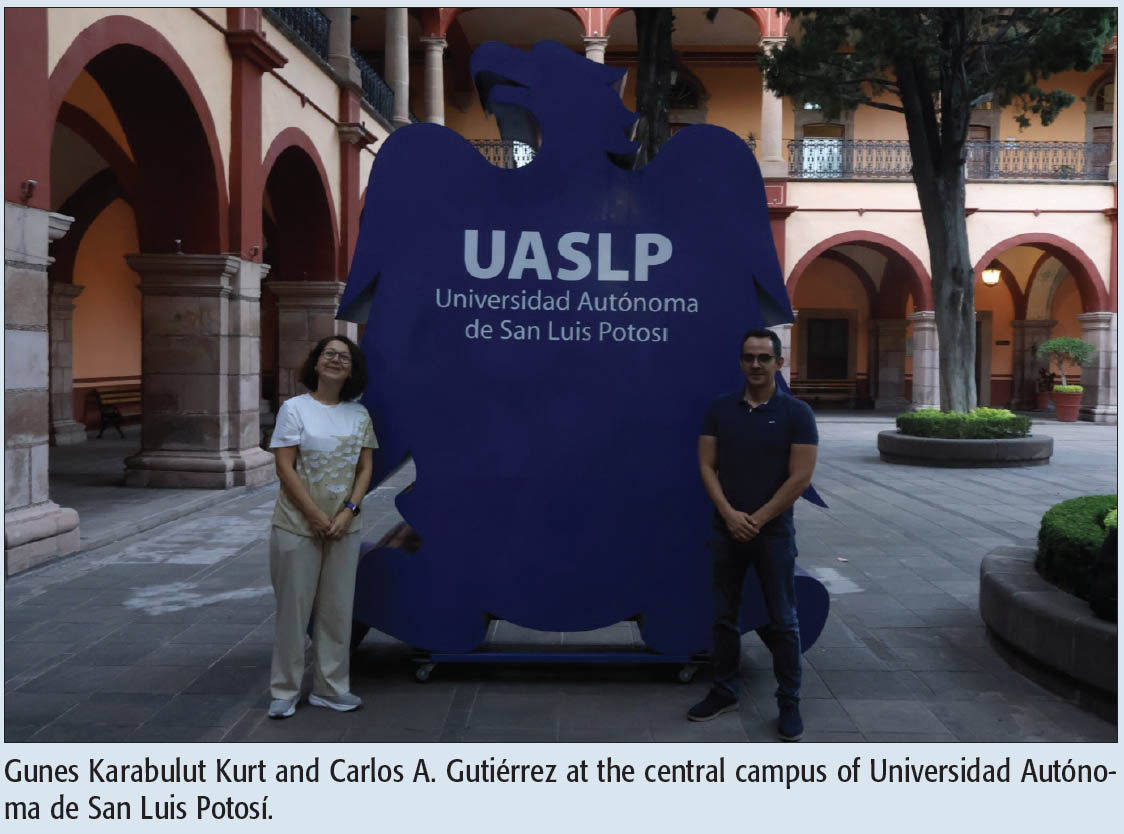
I began the trip on October 29, 2025, departing from Paris (CDG) at 11:45 and arriving in Mexico City at 16:55. That same evening, I continued to San Luis Potosí, landing at 23:07 after a short domestic flight. On October 31, 2025, I gave the first lecture at the Tecnológico de Monterrey, San Luis Potosí campus, hosted by Dr. Carlos A. Gutiérrez, Professor of Telecommunications at the Universidad Autónoma de San Luis Potosí (Photo 1). This presentation, titled “Backhaul-related Security Concerns in Non-Terrestrial Networks,” addressed the cybersecurity challenges associated with the backhaul segments and hybrid terrestrial-satellite networks. I examined the vulnerabilities of feeder links, the potential impact of spoofing and jamming attacks, the risks associated with misconfigured gateways, and the consequences of shared-spectrum operations. The university was closed for students due to an ongoing strike; however, a considerable number of professors attended my talk. Also, for the students, my talk has been recorded on Teams and broadcast live. After my talk, Prof. Ruth M. Aguilar-Ponce spoke about the department’s structure and graduate programs.
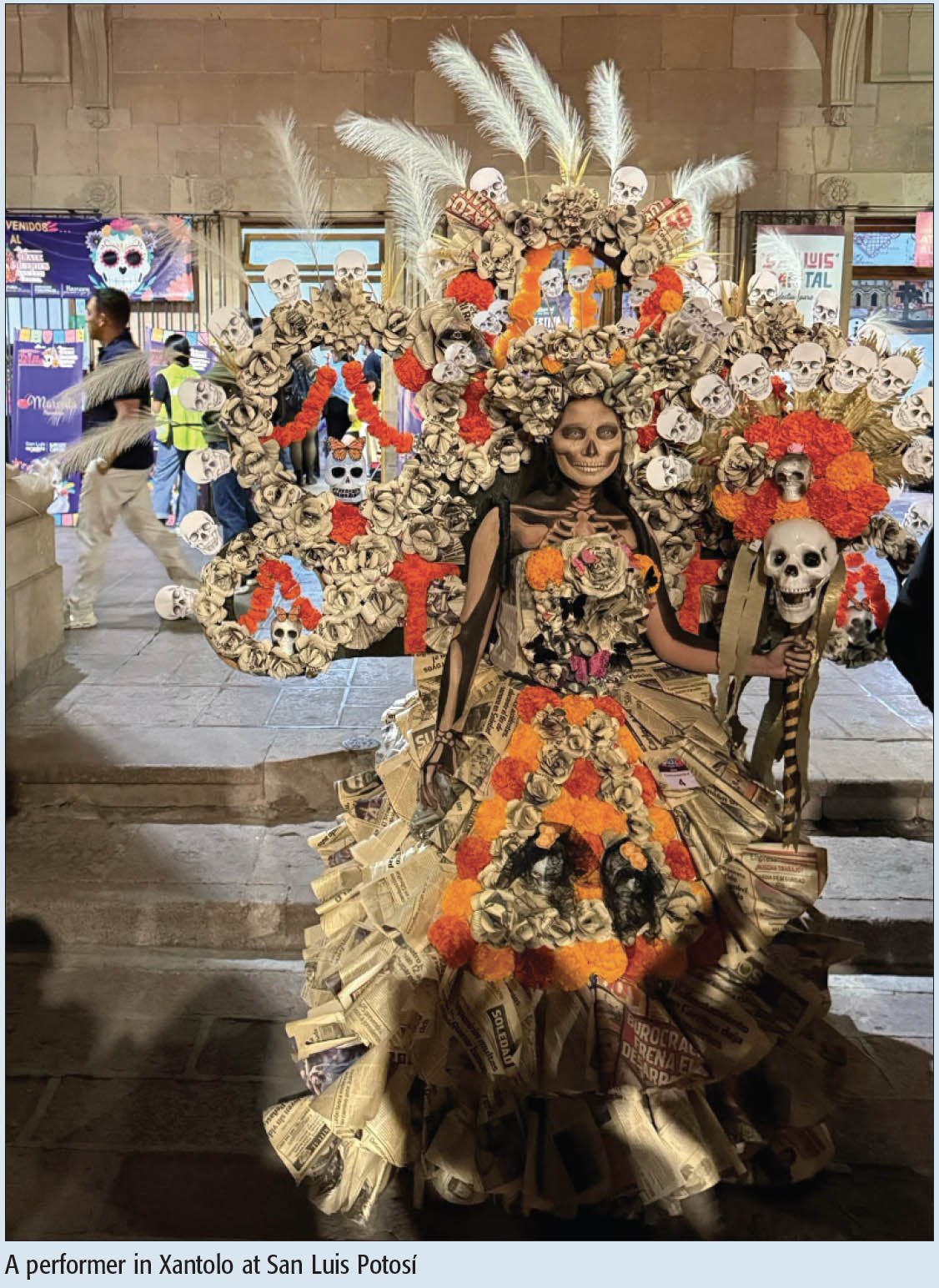
During my visit, it was also Xantolo. This is a sacred festival that links people to their ancestors (Photo 2). Traditionally, towns come alive with performers of all ages dancing along the streets. The colorful streets, vibrant music, and deep cultural symbolism made the experience truly unforgettable for me.
Monterrey, Mexico
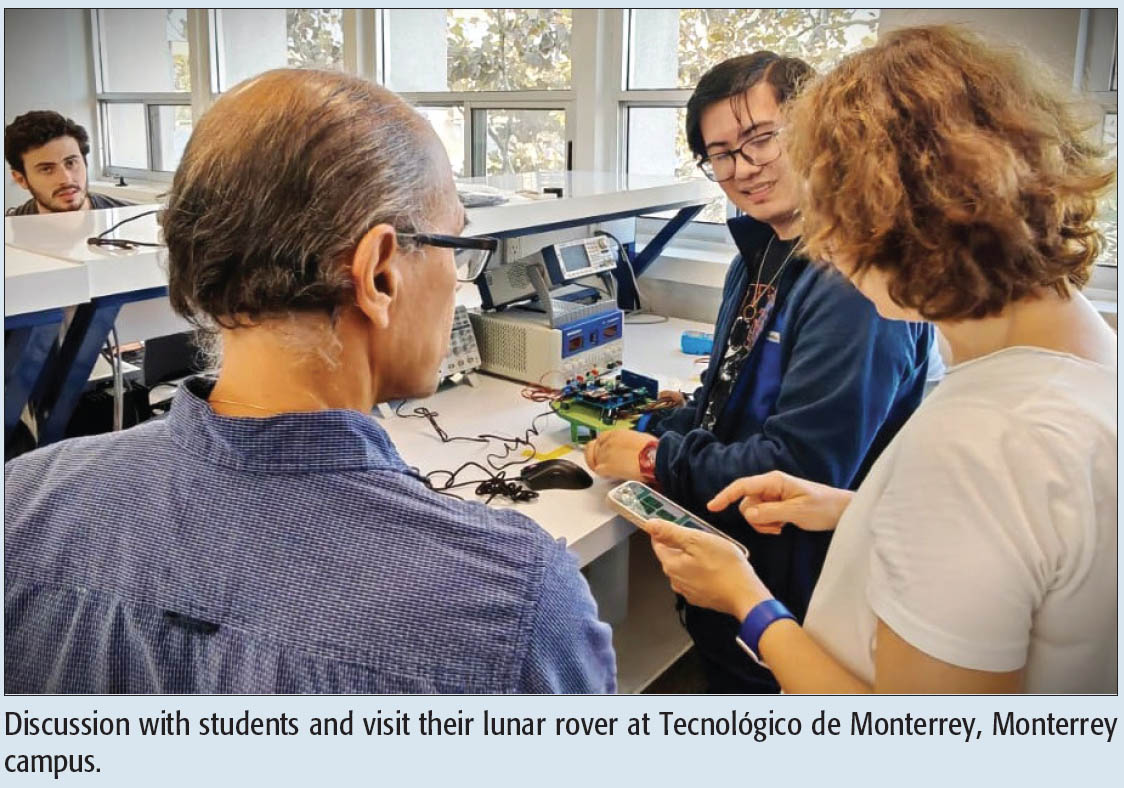
I departed San Luis Potosí on the morning of November 2, flying first to Mexico City at 09:10 and then onward to Monterrey, arriving at 11:53. My second DL lecture took place on November 3, 2025, at the Tecnológico de Monterrey, Monterrey campus, where Dr. Cesar Vargas-Rosales welcomed me. In my talk, I provided an overview of sensing-communication integration, interference monitoring, multi-layer satellite architectures, and resilient space-to-Earth communication pathways. The audience, comprising faculty members and students, participated in an active and technically rich discussion (Photo 3). After my talk, I also had the opportunity to discuss with students and visit their lunar rover projects (Photo 4).
LATINCOM & Antigua, Guatemala
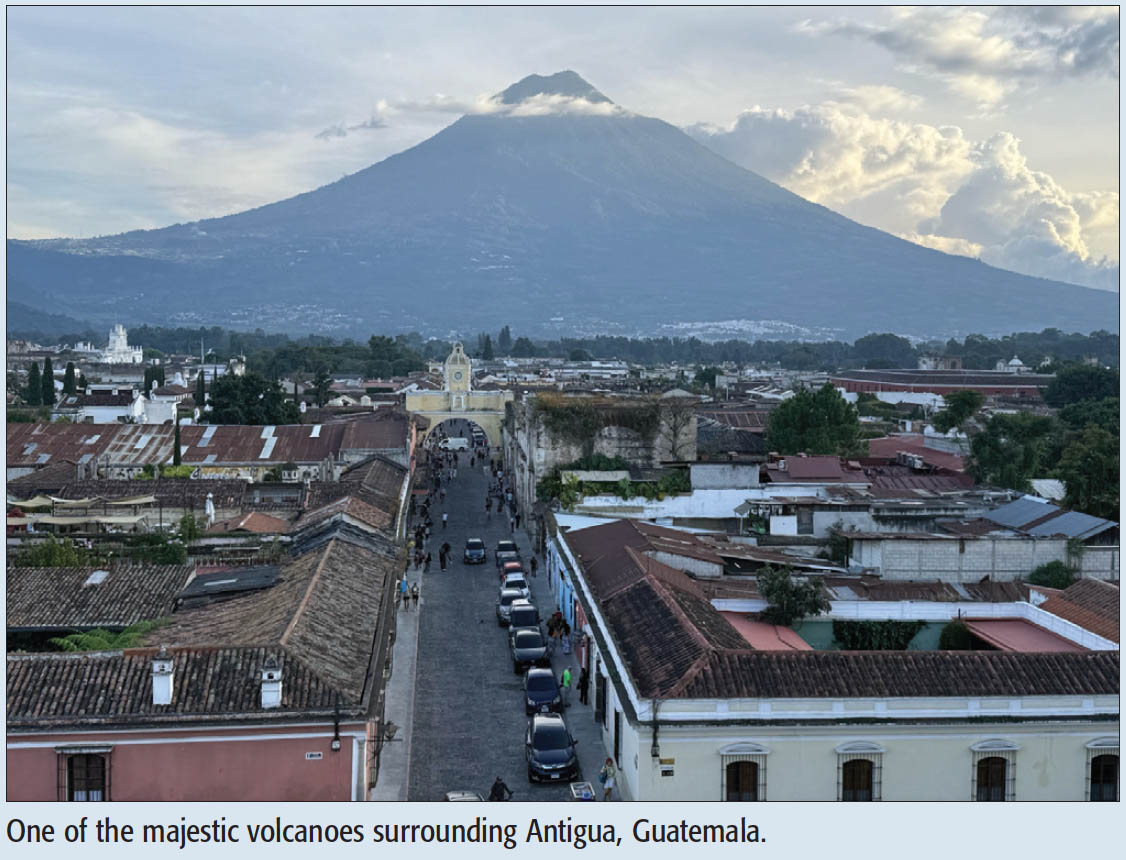
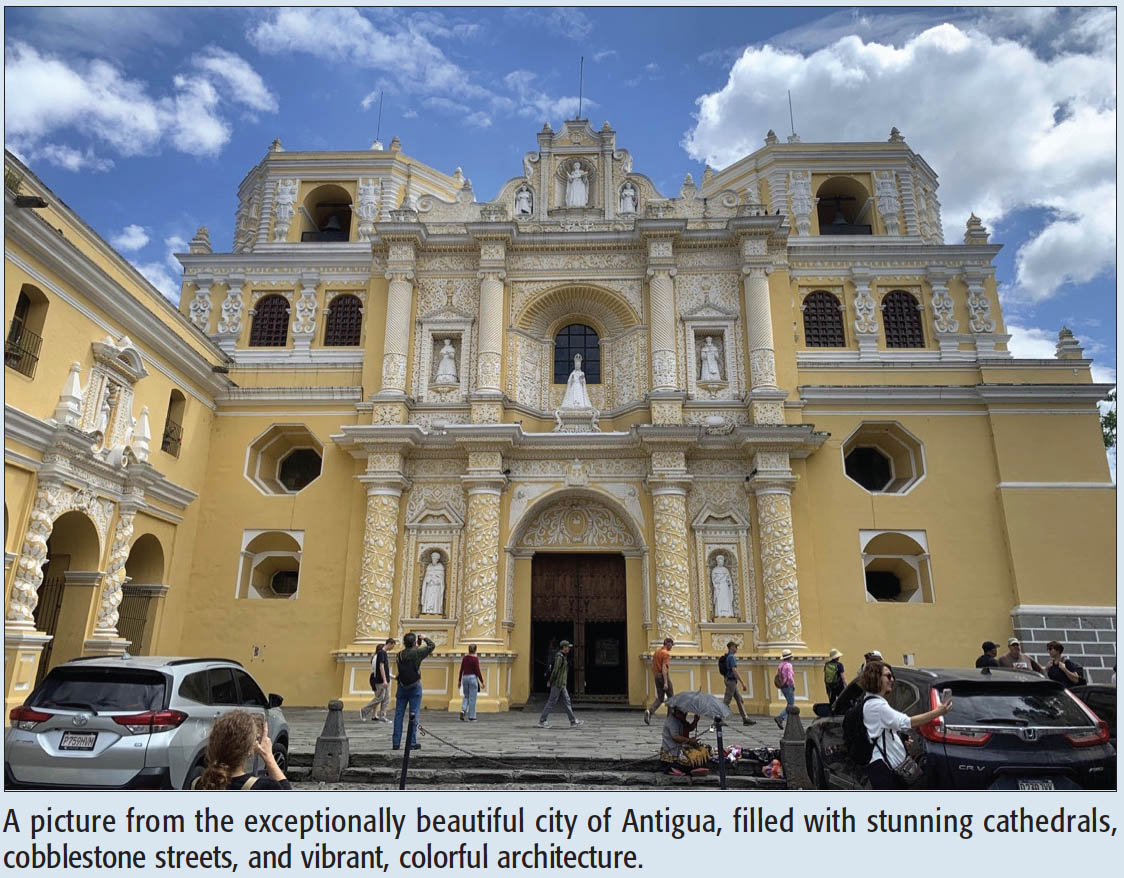
The final stage of the tour required further travel on November 4, beginning with a flight from Monterrey to Mexico City at 11:40, followed by a connection to Guatemala City, where I arrived at 15:47. From there, I continued to Antigua for participation in IEEE LATINCOM 2025. Antigua is an exceptionally beautiful city, framed by majestic volcanoes and filled with stunning colonial cathedrals, cobblestone streets, and vibrant, colorful architecture, creating a truly enchanting atmosphere (Photos 5 and 6).
On November 5, 2025, I delivered the conference’s opening keynote, titled “Towards Secure and Sustainable Non-Terrestrial Networks to Bridge Earth and Space.” The keynote examined the evolution of non-terrestrial networks within a sustainability-oriented framework, addressing resilient multi-connectivity, AI-enabled network automation, interference mitigation strategies, and the need for responsible orbital and cislunar expansion. The session drew a diverse international audience, including researchers, practitioners, and IEEE leadership, and led to substantive discussions on the strategic importance of secure, sustainable NTN infrastructure.
The return portion of the trip occurred on November 7, beginning with a flight from Guatemala City to Mexico City at 17:15, followed by an overnight long-haul flight to Paris, arriving on November 8 at 13:30.
Reflections on the DL Program
Overall, these engagements allowed me to interact with academic communities at the Universidad Autónoma de San Luis Potosí (Mexico) and the Tecnológico de Monterrey (Mexico), and to deliver the opening keynote at IEEE LATINCOM 2025 (Guatemala). They collectively contributed to strengthening research links between Polytechnique Montréal and several Latin American institutions, while fostering international discussion on emerging challenges in non-terrestrial networks and space communications. I remain grateful to the hosts and institutions for their warm welcome and for their strong engagement with the topics presented. This DLT demonstrated the value of in-person knowledge sharing and international collaboration. I highly recommend the Distinguished Lecturer Program to fellow researchers as it benefits both professional growth and the IEEE ComSoc community.