On November 3, 2025, as part of the IEEE ComSoc Distinguished Lecturer program and the IEEE Founder’s Day celebration of IEEE HKN, the Tecnológico de Monterrey, Monterrey Campus, was the epicenter of the discussion on the future of telecommunications, when it received three leading international experts in an academic meeting organized by the IEEE ComSoc Monterrey Chapter. Under the title “Next Generation Communication Systems for Mobility, Safety, and Global Connectivity,” the event delved into the technologies that will cement the next decade: 6G, IoT, non-terrestrial networks (NTN), and their applications for smart cities.
The conference had the participation of two IEEE ComSoc Distinguished Lecturers and a renowned IEEE Senior Member:
-
Dr. Claudio Casetti (Politecnico di Torino, Italy), an expert in vehicular networks, presented crucial advances in V2X communications for road safety, with a special focus on the protection of vulnerable users, and the path between standards and implementation.
-
Dr. Gunes Karabulut Kurt (Polytechnique Montréal, Canada), Satellite Systems and 6G Specialist, presented the critical role of non-terrestrial networks and Space Domain Awareness in achieving truly global and resilient coverage. Part of her presentation focused on Space Situational Awareness (SSA) and its relationship to Space Domain Awareness (SDA).
-
Dr. Francisco Falcone (Faculty of Excellence in Telecommunications at Tec de Monterrey and Director of the Smart Cities Institute at UPNA, Spain) opened the sessions by framing the relevance of these technologies in the smart grid ecosystem and their cross-cutting impact.
Beyond enabling students, academics, and experts to interact directly, the event fostered meaningful dialogue among the speakers. In this exchange, European and American viewpoints converged and contrasted on some of the most urgent technological frontiers: driving ultra? low latency, mastering spectral efficiency, ensuring seamless interoperability across diverse systems, and advancing transformative applications such as autonomous mobility and integrated satellite networks.
By bringing together highly relevant topics and the expertise of seasoned specialists, the event cultivated a vibrant atmosphere of exchange. The speakers’ ability to distill complexity into accessible insights inspired active participation and opened space for genuine dialogue with the audience. The conference served as a powerful forum for knowledge transfer and collaboration, offering firsthand exposure to the future of global telecommunications.
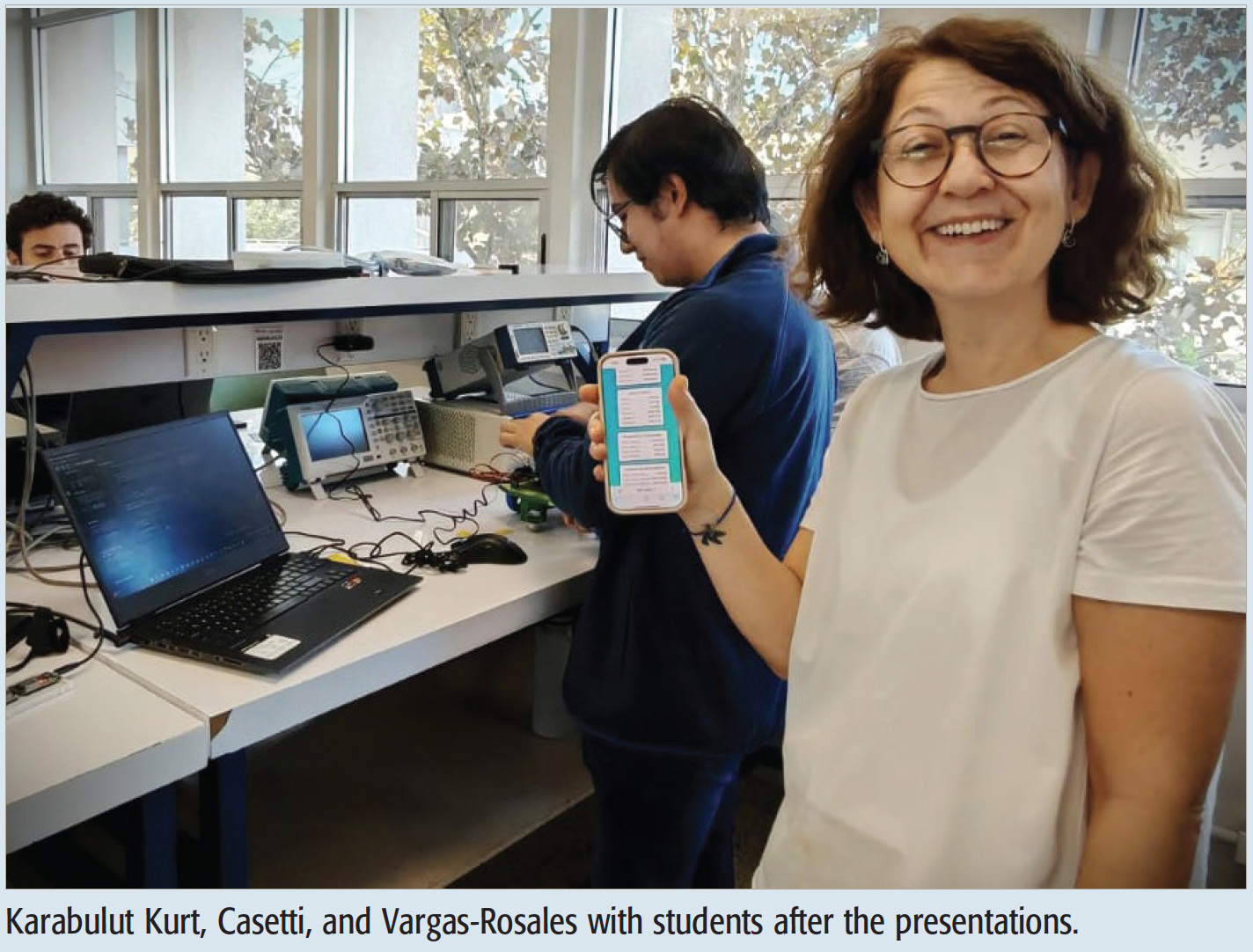
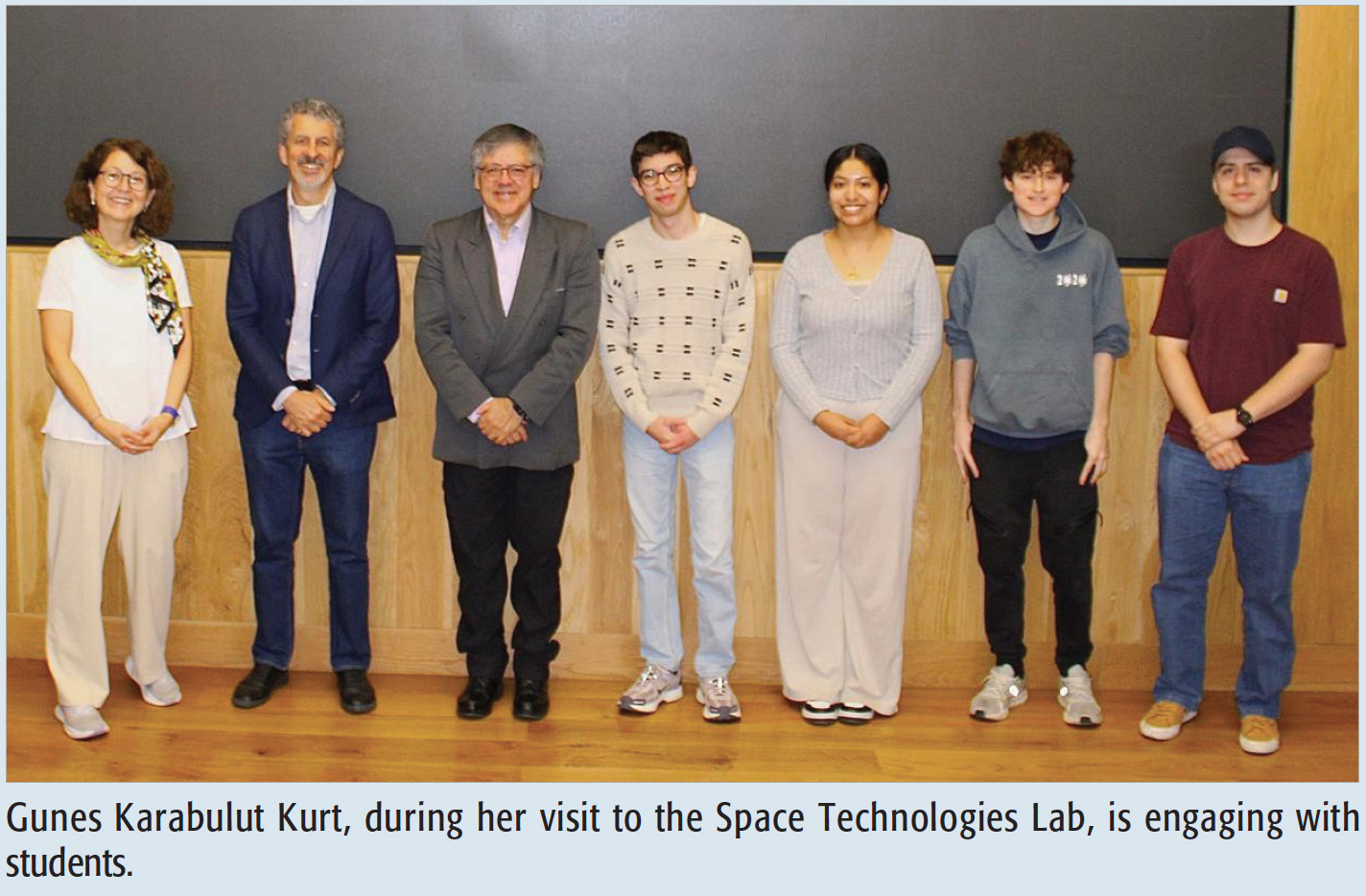
The feedback extended beyond the auditorium. During a subsequent visit to the laboratory of Space Technologies, Dr. Karabulut Kurt learned first-hand about innovative projects developed by students in the Concentration on Space Technologies, for engineering students, and offered valuable recommendations based on her extensive international experience.
The realization of this meeting was possible thanks to the management of Dr. César Vargas-Rosales, head of the IEEE ComSoc Monterrey Chapter and Faculty Advisor of the IEEE-HKN Lambda-Rho, Tecnológico de Monterrey Chapter, who promoted and coordinated the participation of the distinguished speakers. Logistical and venue coordination at the Monterrey Campus of Tecnológico de Monterrey was handled by the Faculty of Excellence Coordinator, M.Sc. Analía González-Cantu.
These initiatives reinforce IEEE and Tecnológico de Monterrey’s commitment to technological vanguard, enriching both academic research and the training of the next generation of communications engineers.